
Summary – What Wildlife Can You See On a 14 Day Namibia Self-drive Safari
On a typical 14-day self-drive safari in Namibia, you’ll encounter a wide variety of wildlife, from large mammals to smaller creatures and plenty of birds. Namibia isn’t as dense with wildlife as wet safari parks, but it’s special because you can see animals in open landscapes, on your own schedule. What Wildlife Can You See On a 14 Day Namibia Self-drive Safari
If you spend time in Etosha National Park, you’ll likely see elephants, lions, giraffes, zebras, springbok, wildebeest, and many species of antelope. Etosha is one of the best places in southern Africa to spot wildlife around waterholes, especially in drier months when animals gather there.
Many guides list much of what you’ll see as classic African safari species — lions, elephants, rhinos, leopards, lions and others. Some animals are common and easy to find. Others, like rhinos and leopards, may take patience and timing.
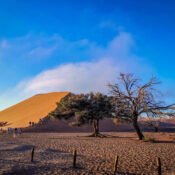
Beyond Etosha, the north and northeast like Caprivi or Kavango have hippos and other river species. Out in the desert and dry areas, animals like oryx (gemsbok) and springbok thrive. Birds are everywhere — from ostriches and raptors to hundreds of small species found around water and woodland edges.
This landscape diversity means that a 14-day trip gives you time to see animals in multiple habitats, not just one park.
For a full step-by-step guide, see our complete Namibia Camping Safari Guide
Wildlife You’re Likely to See
Big Mammals and Safari Icons
- Elephants — You’ll see African elephants, especially in Etosha around waterholes. These desert-adapted elephants can be smaller but are everywhere in the park. Watery spots are prime viewing in dry months.
- Lions — Lions are classic safari animals and show up in Etosha. Watching them near watering areas at dawn or dusk is a highlight for many travellers.
- Leopards — These cats are present but shy. Spotting them takes patience and often luck. They like thicker bush and high branches.
- Black Rhinoceros — Etosha has a conservation population. Sightings are less common but possible, especially around waterholes, including illuminated ones near camps.
Other Big Mammals
- Cape Buffalo — In Etosha this species is rare but part of the broader Big Five set. You might see them in some eastern parts of parks or reserves.
- Cheetahs — These fast cats are around, especially in open plains. They’re not as commonly seen as lions, but they’re there.
- Hyenas — Spot spotted hyenas near waterholes and on the move at night or sportier times of day.
Herbivores and Antelope
- Oryx (Gemsbok) — Probably the animal you’ll see most often in deserts and plains. Their long horns and markings make them easy to pick out.
- Springbok — These small antelope are almost everywhere — in open plains, near water, in desert edges. They often gather in groups.
- Zebra — Both plains zebra and mountain zebra species (like Hartmann’s) live in Namibia. You’ll often see herds near water.
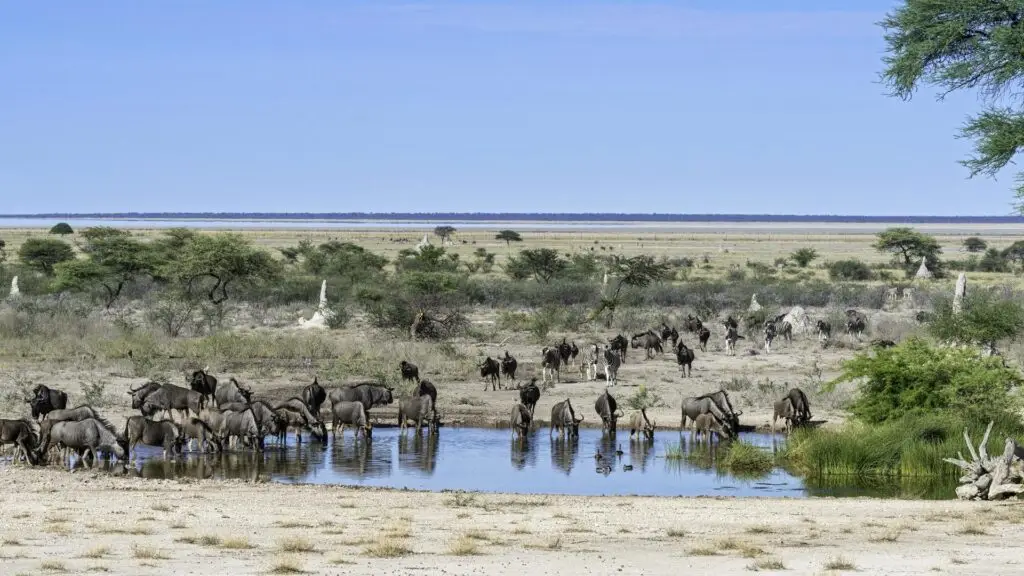
- Wildebeest — Usually found around waterholes and grass areas. They don’t do a huge migration like eastern Africa, but they’re plentiful.
- Kudu and Impala — You may see greater kudu and impala in woodland and savanna fringes. These graceful browsers show up in East and North parts.
- Red Hartebeest and Dik-dik — Even small antelope like dik-dik can catch your eye as they move gently through light bush.
Birdlife
- Ostrich — The largest bird on earth is very common in open terrain and plains.
- Raptors and Smaller Birds — Etosha hosts over 300 bird species, from raptors to colourful hornbills, lilac breasted rollers and sociable weavers. It’s a treat even if you’re not a bird specialist.
Water and River Animals (in Wet Areas)
- Hippos — If your route includes the Caprivi Strip or Kavango and Kunene river areas in the northeast, hippos are common. They’re not found in Etosha due to lack of year-round rivers, but they are plentiful farther east.
- Crocodiles — These lie in wait near rivers in the wetter parts of Namibia. They’re not as visible in desert parks but show up where water runs year-round. (context from safari sources)
Smaller and Nighttime Creatures
- Bats, Ground Squirrels, Mongooses — Smaller mammals add character to your experience. They may be easy to miss, but they are part of the web of life around camps and roadside rest areas.
- Jackals, Foxes and Honey Badgers — You might spot these at water edges or on night drives. They’re more shy, but guides and sharp-eyed travellers find them.
How Wildlife Looks on a Real Trip
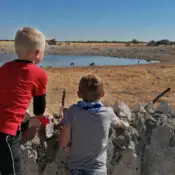
When i first sat and watched elephants drink at a waterhole, i felt a quiet i hadn’t known before. That moment — calm water reflecting evening light, a herd moving slowly and peacefully — was more meaningful than just checking a box on a safari list.
Later i saw zebra and springbok near the same waterhole. The stripes and patterns stood out against yellow grass. They weren’t just animals — they felt like characters in a bigger story of land and survival.
Small creatures made me laugh too — a dik-dik hiding under a bush, or an ostrich pecking along a gravel road as i drove by. They reminded me that a 14-day safari isn’t only about big cats. It’s about life in many forms, coexisting and showing up when you least expect them.
Quick Fact Checklist — Namibia Safari Wildlife
- Elephants — common in Etosha around waterholes, especially in dry season.
- Lions — present throughout Etosha, more active at dawn/dusk.
- Leopards & Cheetahs — harder to find, but present in varied habitats.
- Black Rhinos — endangered, often seen near waterholes in parks.
- Zebras & Wildebeest — common plains animals around water.
- Springbok & Oryx (Gemsbok) — very common, especially in open areas.
- Giraffe — widespread and often easy to spot feeding on trees.
- Hippos & Crocodiles — found in wetter, river regions in the northeast.
- Birdlife — 300+ species in Etosha and more across habitats.
- Smaller Mammals — jackals, foxes, mongooses, and others add to the experience.
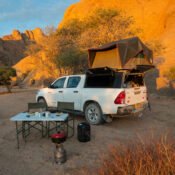
Enjoy the freedom to explore Namibia. We provide travellers with a unforgettable self-drive camping safari across Namibia. Our services include trip planning, campsite booking and 24/7 support. We organise fully equipped 4×4 vehicles, rooftop tents, camping equipment, and practical travel support. Our travellers get clear routes, real driving distances, and realistic time planning. No rush. No pressure. Just solid travel planning.
We focus on budget-friendly self-drive camping safaris that still feel safe and well prepared, supporting eco-friendly travel (sustainable self-drive camping safaris). We share real local advice. If a tyre blows or plans change, we’re there to help.
Our team lives and works in Namibia. We know the gravel roads, fuel stops, weather, and wildlife areas. We build routes that make sense and keep the distances realistic. You travel at your own pace, sleep under the stars, and enjoy the freedom.
Let us arrange your camping safari. Join us for an adventure, turning photos into memories.
For a full step-by-step guide, see our complete Namibia Camping Safari Guide