Summary – What you should know about fuel availability is like on Namibia road trips
In Namibia, fuel is available in towns and major stops, but gaps between stations in rural or remote areas can be large. On many self-drive routes you will travel long stretches of desert or gravel roads between towns, and the next petrol station may be hundreds of kilometres away. That’s why every travel guide and local source on Namibian self-drive trips advises that you fill up whenever you see a station, even if your tank seems fairly full.
Many rural stations accept cash only, and some in smaller towns may not have credit card facilities. Being prepared with Namibian dollars (or South African rand, which is widely accepted at many stations) gives you freedom to fuel up without stress.
On very remote routes, like those through Kaokoland or parts of Damaraland — fuel stations can be far apart enough that some travellers choose to bring extra fuel in jerry cans for peace of mind. That habit is recommended by Namibia road trip guides and car hire advisors.
So the human takeaway is this: fuel is there, but it’s spaced out. You fill up early and often. Namibia’s roads don’t have petrol pumps every few dozen kilometres like you might be used to at home. Getting stuck with an empty tank in the middle of the desert isn’t just inconvenient, it can derail your whole itinerary.
Below you’ll find fact points that give you the real picture of what to expect, what locals and guides suggest, and how to plan for fuel on your road trip.
For a full step-by-step guide, see our complete Namibia Camping Safari Guide
Fuel Availability on Namibia Road Trips
Spacing of Fuel Stations
- In rural and remote regions, fuel stations are often 200 – 300 km or more apart. This means long stretches without a station.
- Even in popular self-drive routes, you may not see a station for a long section of road, and it’s normal to plan your day around these gaps.
Fill Up Early Rule (Half-Tank Guidance)
- A common rule from travel experts is the “half-tank rule”: if your tank is at half, fill up. Don’t wait until it’s low. That way you won’t be stuck if the next station is far off or closed.
- This rule comes up again and again in travel tips because Namibia’s road distances are large and fuel stops are infrequent.
Payment and Station Operation
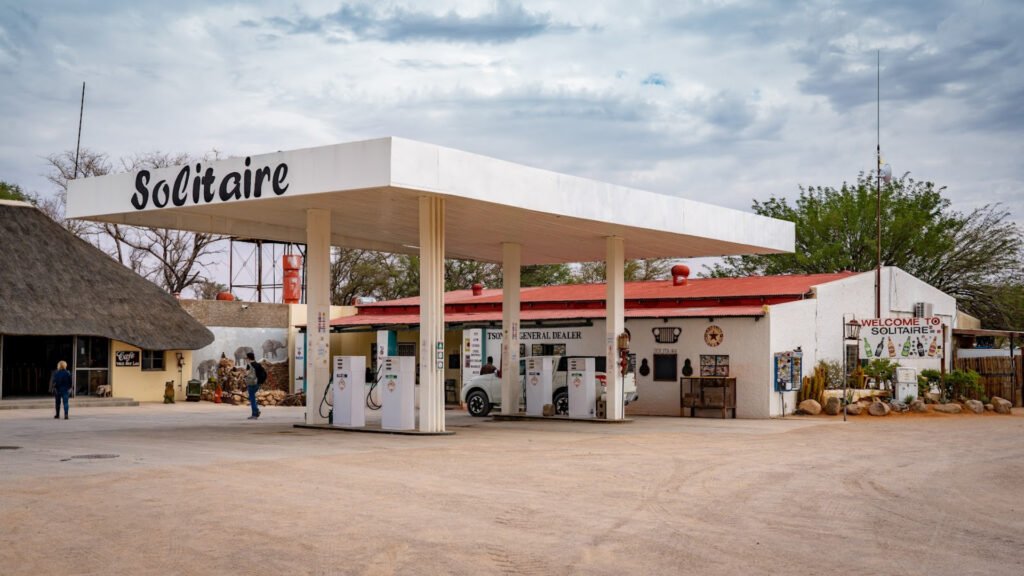
- Most petrol stations in remote areas operate with attendants who fill the vehicle for you. Self-service is not the norm here.
- Many accept cash only (Namibian dollars). Some stations in larger towns may accept credit cards, but you should not rely on cards in remote areas. Bring cash.
Occasional Outages and Closures
- Smaller fuel stops may run out of fuel or close early in the day, especially in isolated spots. That’s why fillers always recommend filling up sooner rather than later.
- Some travellers report that certain lodge fuel stations, for example Namibian Wildlife Resorts (NWR) sites inside Etosha, may not always have fuel available, so you shouldn’t depend on them. (user reports)
Extra Fuel Considerations
- Guides recommend carrying extra fuel in jerry cans if your itinerary takes you far from larger towns, or to rugged campsites and conservancies. This is especially helpful in areas like Kaokoland, Van Zyl’s Pass or Bushmanland where petrol stops are sparse.
- Some rental vehicles come with larger tanks or offer optional jerry cans for extra range, which can reduce stress when you’re far from towns.
Travel Itinerary Fuel Planning
- Fuel planning is part of route planning. Some travel guides recommend plotting petrol stops before lodging or campsite stops so you never arrive with low fuel.
- Tools like offline maps (e.g., Tracks4Africa) that show fuel stations can help you plan where to fill up on your actual route rather than guessing where fuel might be.
Fuel Types and Quality
- Petrol and diesel are widely available in most towns and major stops, and diesel is generally common across the country if your rental vehicle runs on it.
- In very small or remote stops, fuel quality and availability can vary, so it’s wise to fill up in major towns or known stations when you have the chance.
What This Means for Your Road Trip
So treat fuel planning as part of your safari logistics. Chart distances between known stations, note which ones take cards or cash, and bring a couple of jerry cans if your route dips into isolated country. That way you enjoy the safari, not worry about getting stuck.
Quick Fuel Checklist
- Fuel stations can be 200 – 300 km apart or more in remote areas.
- Fill up whenever you can, don’t wait until the tank is low.
- Many stations accept cash only, carry Namibian dollars or South African rand.
- Fuel may run out or close early in small places, plan ahead.
- Extra fuel in jerry cans gives peace of mind on isolated legs.
- Offline maps that show fuel stops help plan your journey.
Enjoy the freedom to explore Namibia. We provide travellers with a unforgettable self-drive camping safari across Namibia. Our services include trip planning, campsite booking and 24/7 support. We organise fully equipped 4×4 vehicles, rooftop tents, camping equipment, and practical travel support. Our travellers get clear routes, real driving distances, and realistic time planning. No rush. No pressure. Just solid travel planning.
We focus on budget-friendly self-drive camping safaris that still feel safe and well prepared, supporting eco-friendly travel (sustainable self-drive camping safaris). We share real local advice. If a tyre blows or plans change, we’re there to help.
Our team lives and works in Namibia. We know the gravel roads, fuel stops, weather, and wildlife areas. We build routes that make sense and keep the distances realistic. You travel at your own pace, sleep under the stars, and enjoy the freedom.
Let us arrange your camping safari. Join us for an adventure, turning photos into memories.
For a full step-by-step guide, see our complete Namibia Camping Safari Guide