
Sossusvlei & Deadvlei: Visit the Iconic Red Dunes of Namibia
- Home
- Sossusvlei & Deadvlei: Visit the Iconic Red Dunes of Namibia
Places & Attractions
Discover the Magic of Sossusvlei and Deadvlei
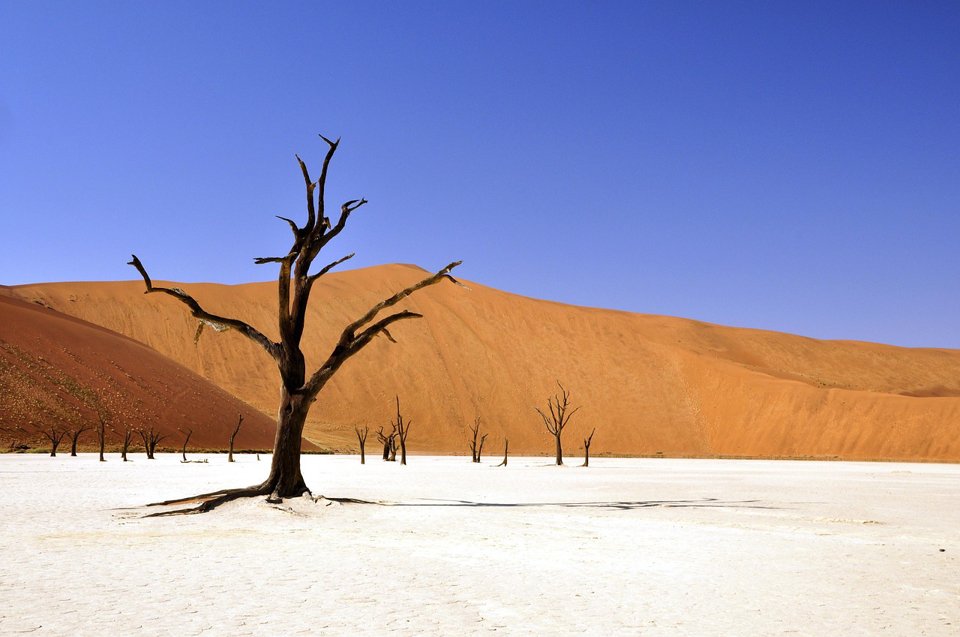
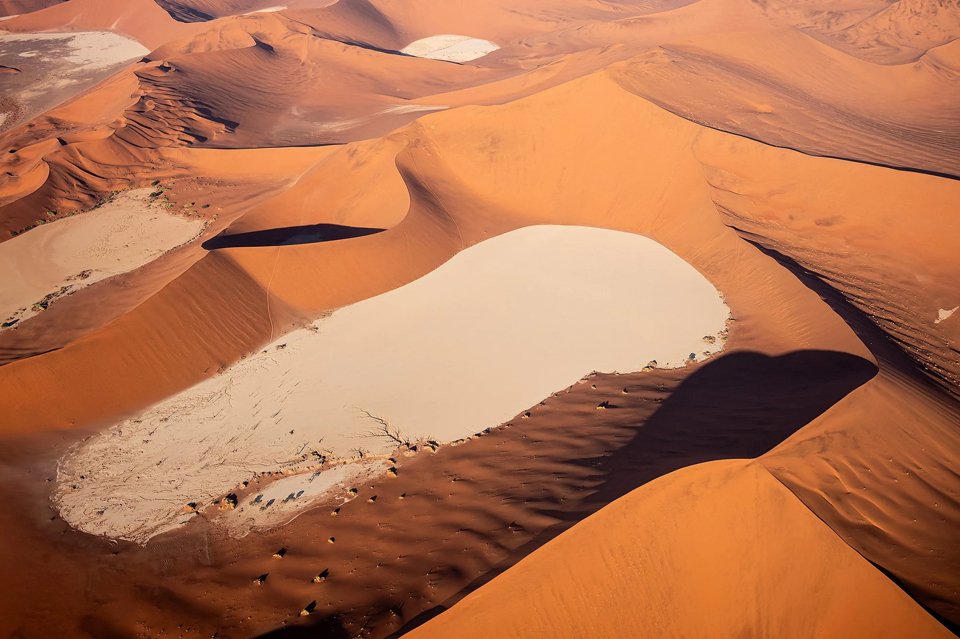
Sossusvlei and Deadvlei are places of stark beauty in the desert of Namibia. You’ll see towering red sand dunes, a pale clay pan, and haunting, black dead trees against red sand and white earth. The places show how harsh, ancient desert life can be — but also how resilient life gets. It’s quiet. It’s wide. It’s lonely in a good way. If you go when the light is soft — early morning or evening — you’ll see why photographers and nature-lovers call it magical.
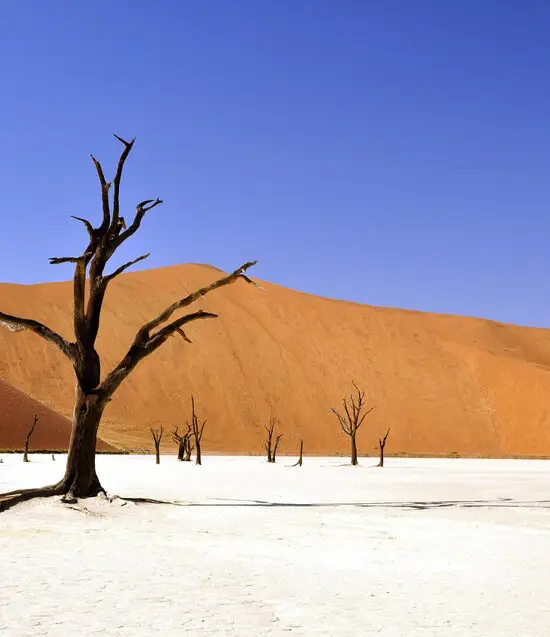
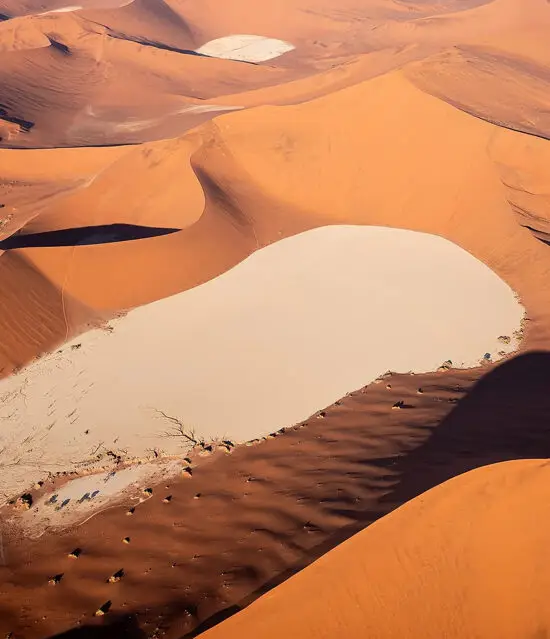
- Deadvlei used to be watered by an old river, the Tsauchab River. When the river flooded long ago it created temporary shallow pools where water collected, enough for camel-thorn trees to grow.
- Later the climate changed and sand dunes shifted. The dunes blocked water flow and the river stopped reaching the pan. The trees died for lack of water.
- The dead camel-thorn trees died maybe 600–900 years ago, but because the desert is so dry, their black skeletons remain standing. They haven’t rotted.
- Sossusvlei and Deadvlei are inside the Namib-Naukluft National Park — a huge protected area in Namibia.
- The Pan / dune field sits in the southern part of the huge Namib Desert.
- The gateway for most visitors is a small settlement called Sesriem. From Sesriem you drive into the dunes/pan area.
- The months from about May through October (Namibia’s dry “winter”) are often best. Weather tends to be milder — cooler mornings and evenings — making dune climbs and walking more comfortable.
- Summer (roughly November to April) can be very hot. Then the light can still be dramatic at sunrise or sunset — but midday heat is intense.
- No matter the season, early morning or late afternoon are the nicest times. Light casts strong colors and shadows on the sand dunes, and temperature is easier to handle.
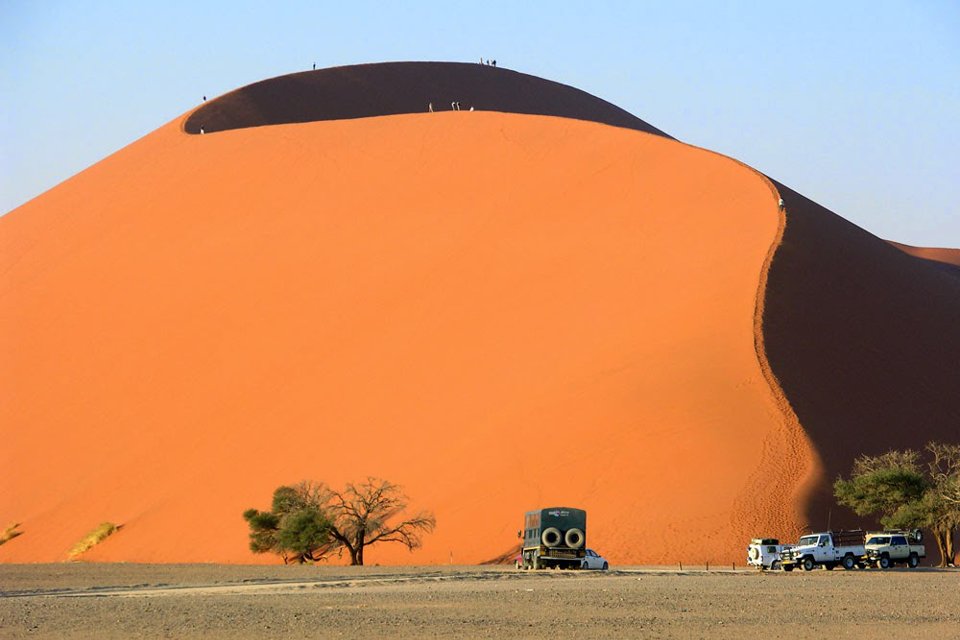
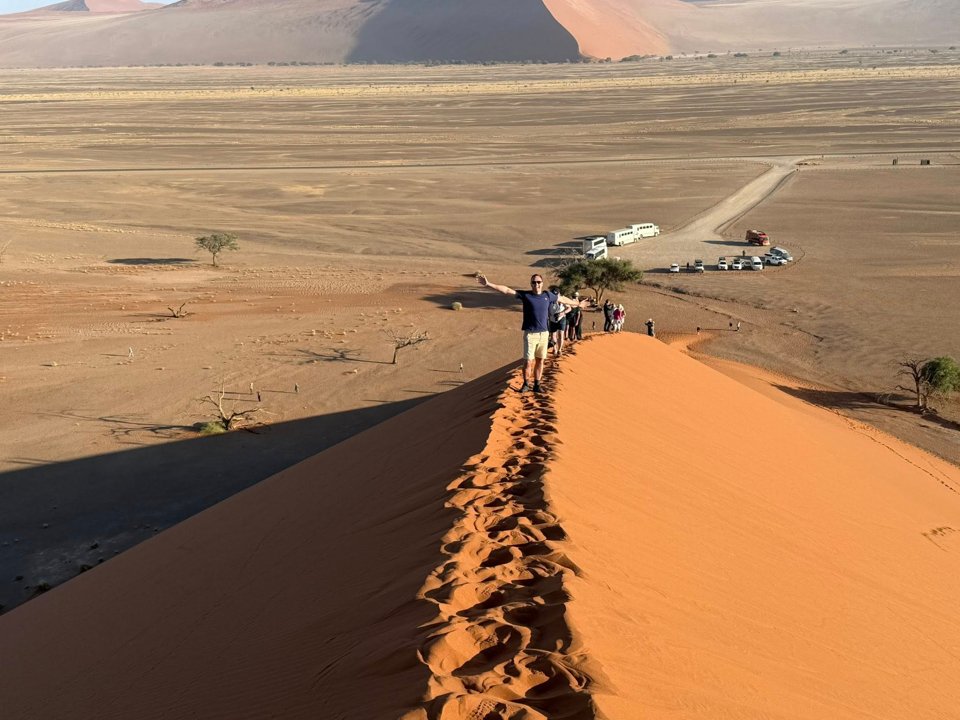
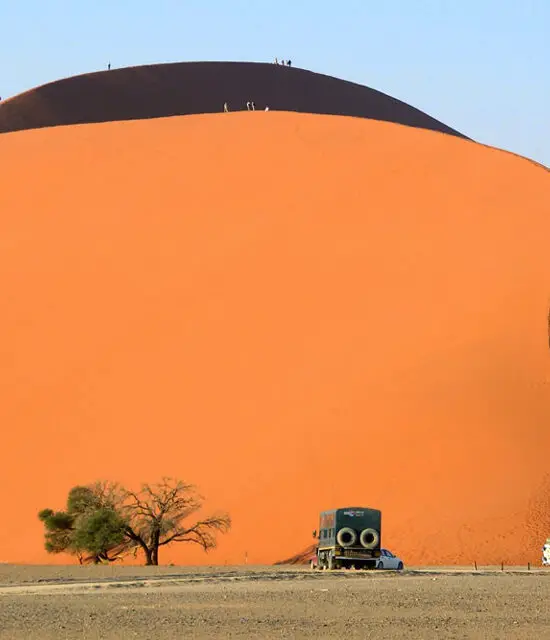
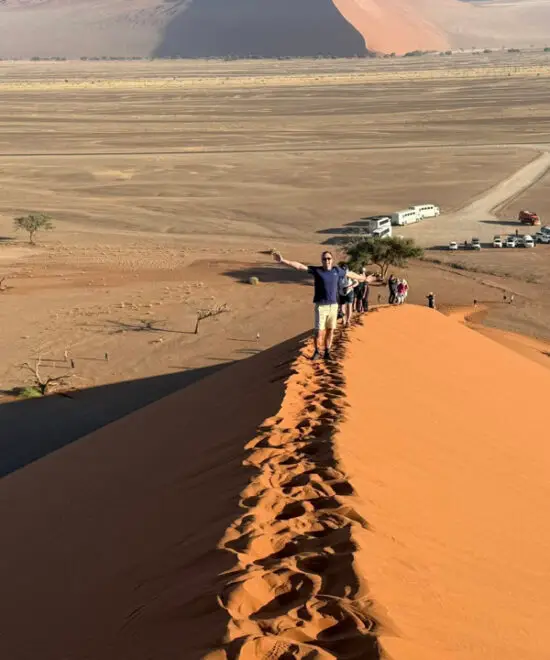
- Climb a dune — for example the well-known Dune 45 (near the road) is a favourite for many visitors. From the top you get sweeping views over dunes and pans.
- Walk or hike into the pans: both Sossusvlei’s salt/clay pan and Deadvlei’s clay pan offer surreal landscapes. In Deadvlei you’ll see the ghostly trees standing on cracked white earth, surrounded by dunes.
- Photograph the colors and shapes. In early morning or at sunset, dunes glow red-orange, shadows deepen — perfect for photos. Deadvlei especially is one of the most photographed spots in Namibia.
- For a different rhythm, try a nature drive (on a 4×4 or guided), where you might spot desert-adapted animals moving around.
- Stargazing at night can be amazing — the desert has low light pollution, and the wide, open sky feels extra deep.
- The desert supports animals that adapted to harsh conditions. Around the dunes and pans you might see antelope like Oryx, Springbok, and maybe ostriches.
- Smaller creatures too: reptiles, lizards, desert insects like beetles are part of the ecosystem. Some insects even harvest moisture from morning mist or dew.
- For plant life: desert-tough species survive. In places there are camel-thorn trees (or their dead remains), and hardy shrubs like nara or salsola — plants that survive with very little water or survive via moisture from fog or rare rain.
- Because it’s so dry, decay happens very slowly. That’s why the dead trees in Deadvlei have stood for centuries.
Eco-friendly campsites, reliable 4x4s, 24/7 support
Budget-friendly Self-drive Camping Tours