
Sesriem Canyon: Guided Walks, Travel Info & Access
- Home
- Sesriem Canyon: Guided Walks, Travel Info & Access
Places & Attractions
Sesriem Canyon: Guided Walks, Travel Info & Access
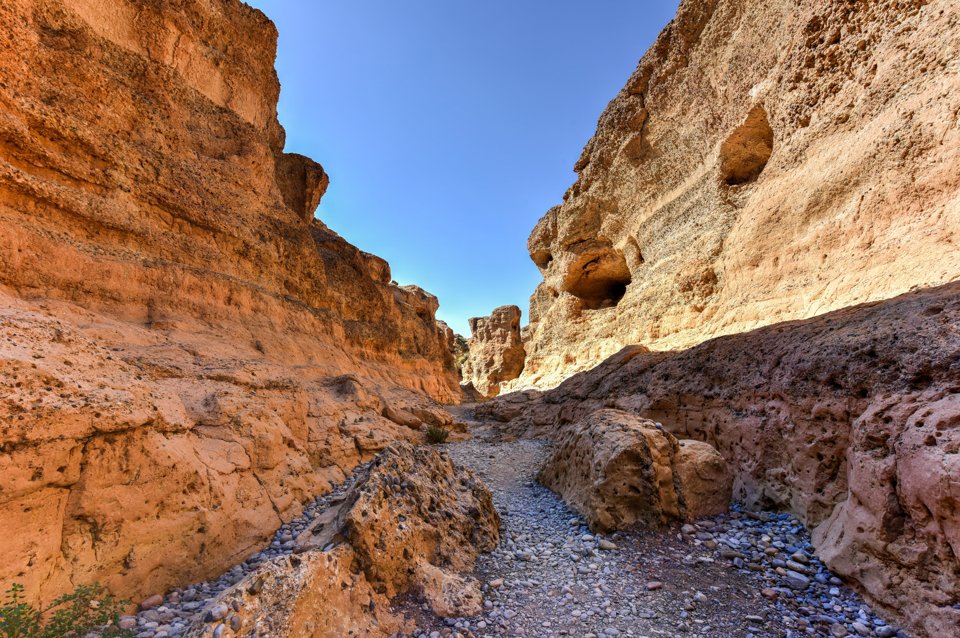
Sesriem Canyon is a narrow, rock-walled gorge carved by water over millions of years, hidden in the desert of Namibia. Its deep cleft offers shady relief from the harsh desert sun. Pools of water collect at its base, sometimes lasting for much of the year. You walk down into a different world — quiet, rocky, cool, and ancient. For travellers coming from places like Windhoek, it’s a unique contrast to the red dunes and pans of the desert. Visiting it gives you a chance to touch both landscape and history with your own shoes.
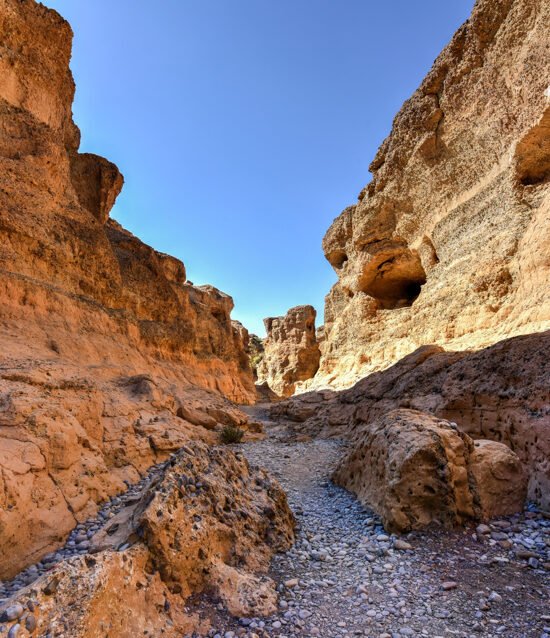
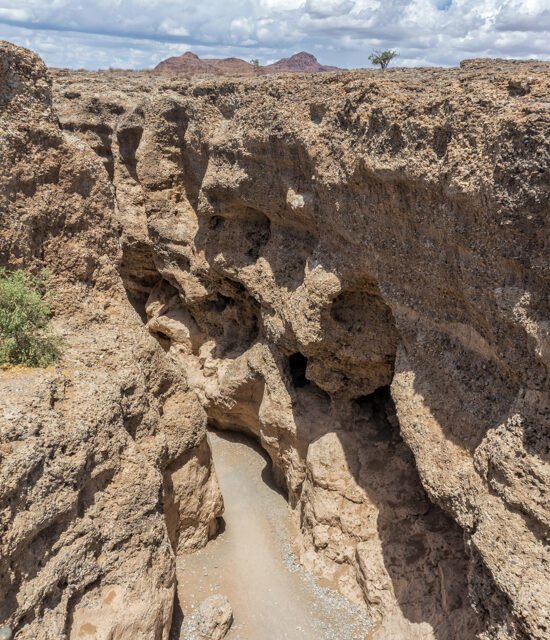
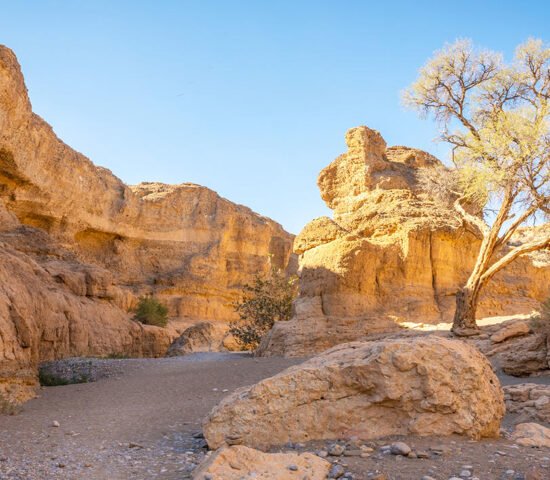
- The canyon was formed by the river Tsauchab River over a period of roughly 2 to 4 million years. It carved its way through sedimentary rock layers in what is now a 1-kilometre gorge.
- The rock layers at the canyon floor and walls hold traces of ancient sediments deposited when the climate was wetter. Over time the river’s flow rubbed, cut, and shaped those layers into the canyon you see now.
- Early settlers — part of the Dorsland Trekkers — used the canyon when passing through. To get water they tied together six leather straps to lower a bucket into the gorge. That’s where the name “Sesriem” (Afrikaans for “six belts/straps”) comes from.
- Over decades the canyon became an important watering spot — for animals, travellers, and livestock — because it holds water long after rains.
- Sesriem Canyon sits inside Namib‑Naukluft National Park, in desert terrain of central Namibia.
- It lies only about 4–4.5 km from the park entrance gate, making it one of the more accessible natural attractions when entering the park.
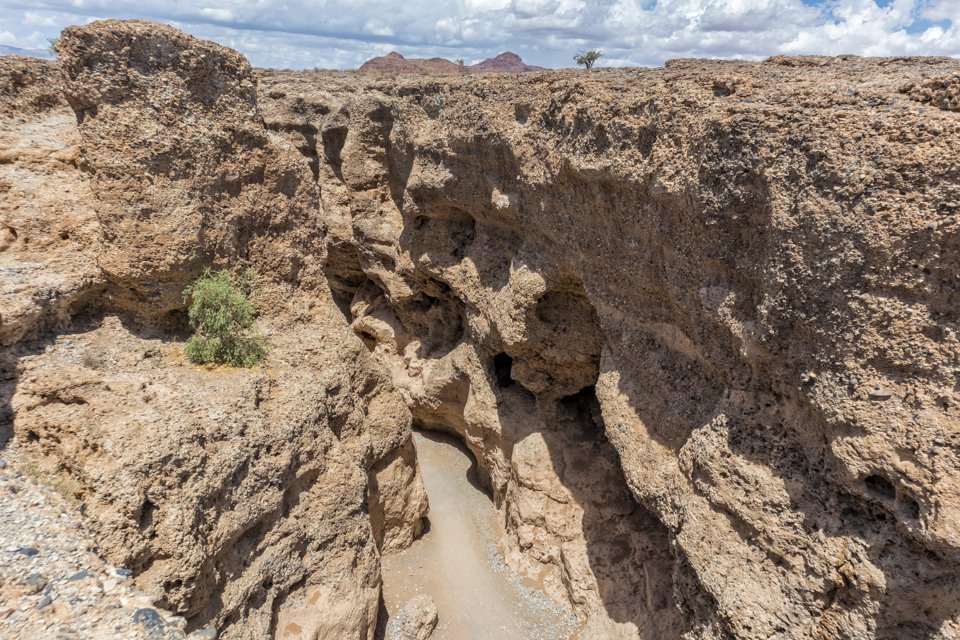
- The gorge is roughly 1 kilometre long and in places plunges up to 30 metres deep. In narrow stretches it can be as slim as 2 metres wide.
- Once you leave the narrow gorge it flattens out into a shallow river bed which eventually leads on towards plains and sands that feed into the broader desert landscape around attractions like Sossusvlei.
- You can visit Sesriem Canyon any time of year. But early morning or late afternoon often give the nicest light, and cooler temperatures make walking easier.
- After rains (which in the region tend to come in occasional storms) the pools at the bottom may fill up. That makes the canyon more alive — water, occasional reflections, maybe some wildlife.
- In dry times the canyon stays dry (except for deep pools), but the shade and cooler air make it a good refuge from the desert heat above.
- If you plan a combined trip with dunes or pans, add a half-day for the canyon. It’s close to the park gate — easy to reach without adding too much travel time.
- Walk through the canyon on foot. There’s a path from a small car park, then stone steps and a walk down into the gorge. As you walk you see layered rocks, narrow walls, maybe water pools, shade — it feels very different from open desert.
- Observe geology. The canyon walls expose sediment layers, gravel and older river deposits. It shows you how past climates and flood events shaped the land.
- Look for nature: small plants, maybe desert-adapted trees or shrubs, and sometimes creatures like lizards, insects, or birds sheltering in shade or around water.
- Rest in shade or during midday heat. The narrow canyon gives natural shelter and relief from sun and heat — a quiet moment to enjoy the desert differently.
- Combine with a trip to Sossusvlei or dunes nearby. Because the canyon is near the entrance gate of the park, you can plan it as part of a larger desert itinerary — get both rock-and-sand experiences in one trip.
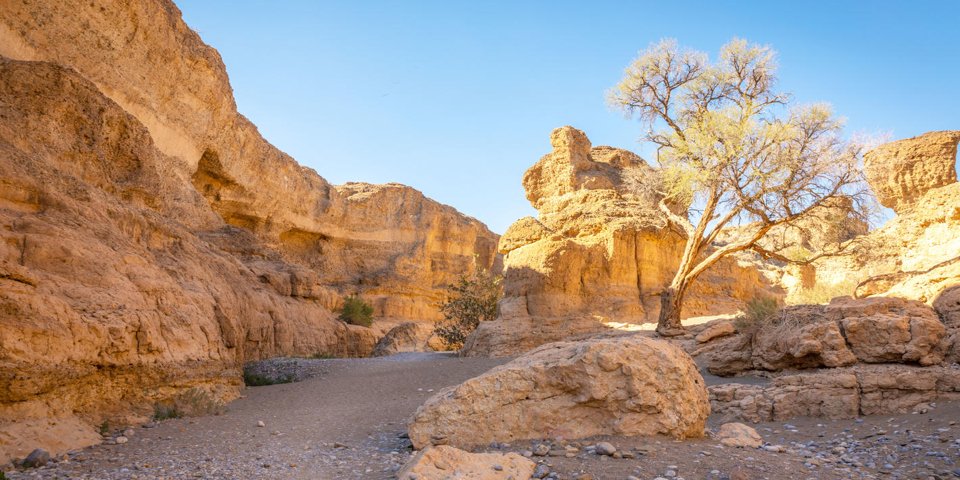
- The canyon area supports desert-adapted plants. For example Camel Thorn (Vachellia erioloba) is common in desert riverbeds nearby.
- Other desert flora — shrubs or small plants adapted to arid conditions — may grow near the canyon, especially close to any water or shade.
- For animals: you might spot mammals like Oryx or Springbok and birds visiting the canyon for water.
- Also reptiles, lizards, and desert-adapted insects find refuge in the shade or near damp spots around the canyon.
- If there’s water, seasonal pools at the canyon bottom attract life — even in a desert this can become a small oasis.
Eco-friendly campsites, reliable 4x4s, 24/7 support
Budget-friendly Self-drive Camping Tours