
Summary – Sedan vs 4×4 Namibia Self-drive and Road Difficulty
Namibia has a mix of roads. Main highways between big towns and attractions are usually tarred or well-graded gravel. You can drive these in a sedan or 2WD car in dry weather without too much stress. That’s the part many guides and travellers say is accessible with a non-4×4 car if you stay on the main routes.
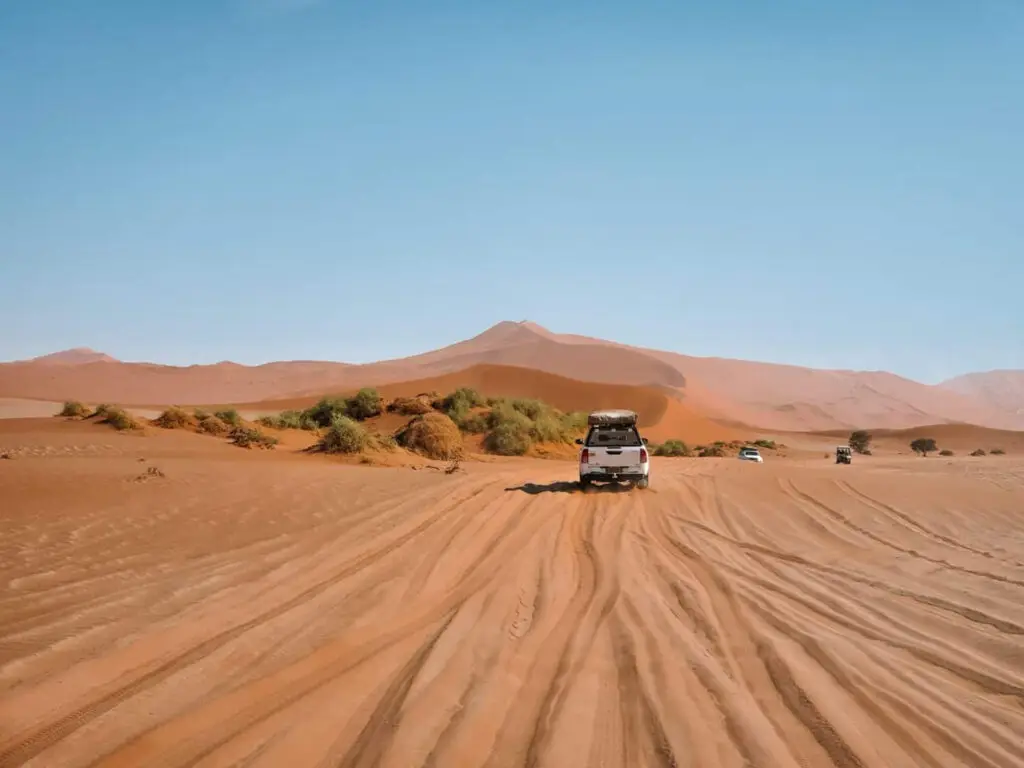
But Namibia’s charm often lies off those main routes — gravel C-roads, sand tracks into desert areas like Sossusvlei or the Namib, remote passes like Tsaris, and long stretches without towns or services. On those, a 4×4 with higher ground clearance and better traction makes life easier and safer. Many travel guides and road condition reports recommend a 4×4 for trips that go beyond simple tar road loops.
On gravel or sand, 4×4 vehicles help avoid things like getting stuck or wearing tyres down fast. If you’re going in the rainy season, some roads get muddy or washed out — and that’s where guides insist a 4×4 is a better choice. A sedan might be okay on big tarred roads in dry months, but it limits what you can safely explore beyond them.
For a full step-by-step guide, see our complete Namibia Camping Safari Guide
Below are clear points from human-written articles and travel reports that explain sedan vs 4×4 Namibia self-drive and road difficulty.
What Guides and Travellers Say
Road Network and Surfaces
- Namibia’s main tourist corridors, like between Windhoek, Swakopmund, Etosha and Sossusvlei entrances, are tarred or well-graded gravel and often manageable in a sedan in dry weather.
- Many attractions, including desert tracks and secondary roads, are unpaved with gravel, sand, and washboard surfaces that are easier with a higher-clearance vehicle.
- Roads like Tsaris Pass or the C27 near Sesriem and Namibrand, noted for poor condition, are generally not recommended for sedans. A 4×4 is advised.
Sedan Cars — Where They Work and Where They Struggle
- Drivers report that sedans can get around on main gravel roads in dry conditions, though comfort and tyre wear can be issues. Sharp stones on gravel may damage tyres more easily.
- Sedans with low ground clearance may feel shaky on gravel, and potholes or corrugations can make the ride uncomfortable. Some travellers have needed to stop or slow way down.
- In remote routes or sandy tracks, sedans don’t perform as well and can be at greater risk of getting stuck or having tyre issues.
4×4 Vehicles — Why Many Guides Recommend Them
- A 4×4 gives better traction on loose gravel and sand, and taller ground clearance helps on rough surfaces. Guides say this makes driving more comfortable and safer during long distances.
- On gravel or sandy roads, a 4×4 reduces the risk of damage from rocks and holes, which are common on secondary tracks.
- For certain regions, like Kaokoveld, distant desert camps, or remote passes, a 4×4 is strongly recommended or effectively necessary to reach there comfortably.
Sand and Desert Tracks
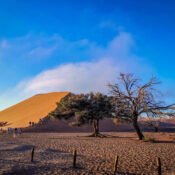
- Famous sandy roads near Sossusvlei and Deadvlei can be tricky. Some travellers choose shuttle services from parking areas to dunes if they don’t want a 4×4 because the final sandy stretch can be tough on smaller cars.
- Sand driving involves lowering tyre pressure for grip. That’s easier with vehicles designed to handle it — usually 4×4 SUVs.
Rain and Seasonal Changes
- In wet months (roughly November–March), gravel can become slippery or muddy and some roads may wash out or have floodplains. A 4×4 helps with traction and control in these conditions.
- Sedans are more vulnerable to getting stuck or struggling in mud or deep sand after rain. Many guides point out that the rainy season makes a 4×4 a safer choice.
Comfort, Safety and Trip Style
- A higher driving position and more rugged suspension on a 4×4 can reduce fatigue on long gravel journeys, offer better view for wildlife, and carry camping gear easier.
- Sedans may be more fuel-efficient and cheaper to rent. Some travellers choose them for straightforward main road trips if budget is tight and roads are dry.
Traveller Experiences Online
- Many travellers online agree that sedans can manage many stretches of gravel, but comfort and tyre wear are common concerns. Some people share stories of multiple flats in small vehicles. (turn0reddit27)
- Others say 4×4 vehicles make the trip more relaxed and safer overall — especially in rough gravel and sandy areas — and that even compact SUVs with 4×4 systems perform better than sedans.
How I Think About It
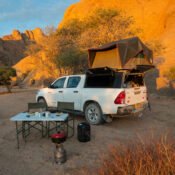
When i packed for my first Namibia self-drive camping safari, i was torn between economy and comfort. At first i thought, a sedan might be enough — the major roads are good, right? Then i spent a day on gravel out of Solitaire toward Sossusvlei and realized my back was sore, the dust was everywhere, and the car felt too low on some bumps. In my rearview i saw other travellers roll up in sturdy 4×4’s with rooftop tents and gear. They moved slower but steadier.
A sedan will get you around if your route sticks mostly to sealed or well-graded gravel roads, especially in dry months. But if you want freedom to explore deeper, traverse rougher secondary roads, ready yourself for wet season surprises, or build a camping safari that goes off main highways, most travel advisors and local guides point to 4×4 as the smarter choice.
It’s like choosing between a city bike and a mountain bike for a long trip — both will roll, but one is built for the terrain you actually face here.
Quick Fact Checklist
- Sedan vs 4×4 Namibia self-drive and road difficulty.
- Tarred main roads are accessible in sedans in dry weather.
- Gravel and sand tracks are easier with 4×4 due to traction and clearance.
- Sand near Sossusvlei is tricky in small cars; many use shuttle services if not in 4×4.
- Heavy gravel and rocky secondary roads often recommend 4×4 access.
- Rainy season can make roads muddy or slippery; 4×4 provides more control.
- Sedans can be more fuel-efficient and cheaper, but comfort and tyre durability may suffer.
- Online travellers report sedans can work on many stretches, but 4×4 gives more peace of mind on rougher terrain.
Enjoy the freedom to explore Namibia. We provide travellers with a unforgettable self-drive camping safari across Namibia. Our services include trip planning, campsite booking and 24/7 support. We organise fully equipped 4×4 vehicles, rooftop tents, camping equipment, and practical travel support. Our travellers get clear routes, real driving distances, and realistic time planning. No rush. No pressure. Just solid travel planning.
We focus on budget-friendly self-drive camping safaris that still feel safe and well prepared, supporting eco-friendly travel (sustainable self-drive camping safaris). We share real local advice. If a tyre blows or plans change, we’re there to help.
Our team lives and works in Namibia. We know the gravel roads, fuel stops, weather, and wildlife areas. We build routes that make sense and keep the distances realistic. You travel at your own pace, sleep under the stars, and enjoy the freedom.
Let us arrange your camping safari. Join us for an adventure, turning photos into memories.
For a full step-by-step guide, see our complete Namibia Camping Safari Guide