Summary – What to Bring and Why
When you’re planning a two-week trip driving yourself through Namibia’s parks, deserts, coast and towns, you must think about comfort, safety and daily life on the road. The country is big. Fuel and towns with shops are often far apart. Temperature swings can be big — hot days, cold nights. For your self-drive camping safari, get tips on Namibia 14-day safari packing list.
So, bring clothing you can layer, gear to keep you fed and sheltered, tools and spares for your vehicle, and items that protect you from sun, dust and insects. Have enough water and food stored for long distances. Plan your electronics and navigation carefully — some areas may not have phone signal, so offline maps are a good idea.
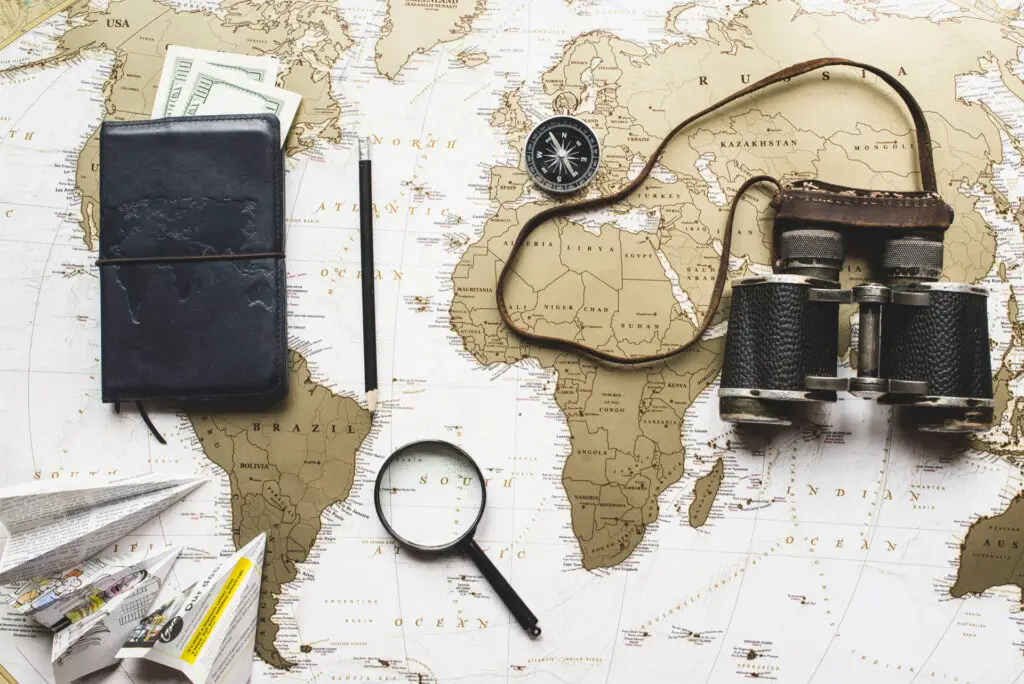
Your packing should balance practical gear for camping and camping cooking, clothing for varied weather, documents and money essentials, tools and vehicle spares and extras that make your journey smoother — like binoculars for wildlife or a headlamp for setting camp at dusk.
This list doesn’t include everything possible, but it includes everything you’re likely to need for two weeks on the road, camping in parks and wilderness areas, and enjoying a full self-drive experience.
For a full step-by-step guide, see our complete Namibia Camping Safari Guide
What to Put in Your Bags
Documents and Money
- Passport (valid for at least six months) and visas if required.
- Driver’s license and International Driving Permit if needed.
- Car rental papers and any camping permits.
- Travel insurance with medical and vehicle cover.
- Cash and credit card (ATMs may be limited in remote areas).
- Printed itinerary and accommodation bookings.
Vehicle and Camping Equipment
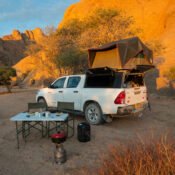
- A 4×4 vehicle with rooftop tent or camping setup.
- Two spare tyres, a tyre gauge, air compressor and jack.
- Extra fuel (jerry can) and canisters of clean water (5–10 L per person per day).
- Camping chairs and table that fit inside or on the vehicle.
- Sleeping bags (warm for nights) and pillows.
- Cooking gear (stove, pots, pans, utensils, plates, mugs, cutlery).
- Cooler or fridge connected to your vehicle for food storage.
- Headlamps or a strong torch with spare batteries.
- Matches or lighter for camp fires or cooking.
Clothing and Footwear
- Light, breathable shirts and trousers for hot days.
- Long-sleeved shirts and pants for sun and insect protection.
- Hat or cap with a wide brim and quality sunglasses.
- Warm layers for cold desert nights or winter months.
- Sturdy walking or hiking shoes and sandals/flip-flops.
- Quick-dry underwear and socks.
- Fleece or jacket for early morning or evenings.
- Swimwear for campsites with water or coastal stops.
Toiletries and Health Supplies
- Sunscreen (SPF 30+ or higher) and lip balm with SPF.
- Insect repellent (DEET or strong alternative).
- First-aid kit (bandages, antiseptic, tweezers, medicines).
- Personal medication and prescriptions.
- Toothbrush, toothpaste, soap, hand sanitizer and wet wipes.
- Toilet paper (very useful on remote stops).
- Moisturizer and lip protection (desert air is dry).
Food and Cooking Supplies
- Dry goods (pasta, rice, oats, snacks).
- Canned foods, sauces, salt, pepper and cooking oil.
- Dish soap, sponge, cloths and trash bags.
- Matches or lighter and firelighters.
Electronics and Navigation
- Offline maps like Tracks4Africa or Maps.me and a road atlas.
- Plug adapter for Namibia (Type D & M sockets).
- Phone chargers, car USB chargers, and a power bank.
- Camera with extra batteries and memory cards.
- Binoculars for wildlife viewing.
Extras That Make a Difference
- Daypack for hikes and game drives.
- Dry bags or ziplock bags to protect documents or electronics from dust.
- Notebook and pen to record memories or routes.
- Snacks or comfort food for long drives.
- Games or books for relaxed evenings at camp.
How to Think About Packing for Namibia
When you’re packing for a two-week self-drive camping trip, there are a few themes that help make the checklist real:
- Climate swings matter. In the desert and inland areas, nights can be cold, while days are hot and dry. Good layers make life easier.
- Dust is everywhere. Sand and red dust get into gear, clothes and electronics. Protect your camera and phone with covers or ziplock bags.
- Water and fuel are your trusted companions. Bring more water than you think you need and fill fuel at every chance. Towns and fuel stops aren’t close together.
- Keep it practical over perfect. Namibia rewards simple gear and comfortable clothing more than anything stylish or fancy.
Quick Reminders
- Pack copies of important documents and have digital backups.
- Check any drone rules before bringing one, as Namibia restricts use in parks.
- Keep valuables secure and don’t leave them in plain sight when you camp.
- Learn basic first aid and familiarise yourself with where the nearest clinics or ranger posts are for emergencies.
Enjoy the freedom to explore Namibia. We provide travellers with a unforgettable self-drive camping safari across Namibia. Our services include trip planning, campsite booking and 24/7 support. We organise fully equipped 4×4 vehicles, rooftop tents, camping equipment, and practical travel support. Our travellers get clear routes, real driving distances, and realistic time planning. No rush. No pressure. Just solid travel planning.
We focus on budget-friendly self-drive camping safaris that still feel safe and well prepared, supporting eco-friendly travel (sustainable self-drive camping safaris). We share real local advice. If a tyre blows or plans change, we’re there to help.
Our team lives and works in Namibia. We know the gravel roads, fuel stops, weather, and wildlife areas. We build routes that make sense and keep the distances realistic. You travel at your own pace, sleep under the stars, and enjoy the freedom.
Let us arrange your camping safari. Join us for an adventure, turning photos into memories.
For a full step-by-step guide, see our complete Namibia Camping Safari Guide