Summary – Do You Need a 4X4 for a Namibia Self-drive Camping Safari
Namibia’s road network is a mix of tarred highways and gravel or sand tracks. The big attractions — Etosha National Park, Swakopmund, Windhoek and even parts of Sossusvlei — are reachable in a 2WD vehicle in dry weather. Many travellers do this and it works fine.
But most of the best camping spots, remote valleys, sandy dune approaches and inland desert tracks become far easier with a four-wheel-drive vehicle. A 4×4 gives higher ground clearance, better traction on gravel or sand, and a more stable ride over long distances. Rental companies in Namibia often equip their 4×4 vehicles with emergency kits, spare tyres and even satellite phones for peace of mind.
Rain changes things. From about November to April you will see more mud, washouts and slippery sections on gravel and sand roads. A 4×4 is recommended in these months because it helps with grip and control.
If your plan is simple routes on main roads in dry months, a 2WD with good ground clearance can work. But if your trip includes camping, remote areas, sandy roads or last-mile approaches to scenic highlights, a 4×4 is what most guides and locals recommend.
For a full step-by-step guide, see our complete Namibia Camping Safari Guide
Below are fact-based points that explain this in clear travel terms so you can think about your options.
Road Conditions Matter
- Namibia’s major highways are tarred and in good shape, but many scenic routes and national attractions are on gravel or sand that isn’t paved.
- Gravel and salt roads can be dusty, uneven or corrugated. These surfaces are easier with a vehicle that has higher clearance and traction.
- Rain can make gravel and sand roads slippery or muddy, which increases the benefit of a 4×4’s traction.
What the Travel Guides Say
- Most guides for Namibia self-drive safaris advise renting a 4×4 if you want comfort, safety and access to varied terrain. A 4×4 helps on gravel, sand, salt tracks and remote wilderness stretches.
- These guides note that 4×4 vehicles equipped with emergency kits and spare tyres give travellers confidence on long independent drives.
Where a 4×4 Makes a Difference
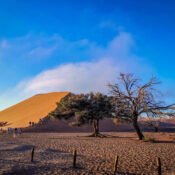
- Routes that lead off the main tar and into sandy territory — like tracks toward the dunes of Sossusvlei beyond the big parking area — are more accessible with 4×4 traction and clearance.
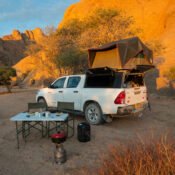
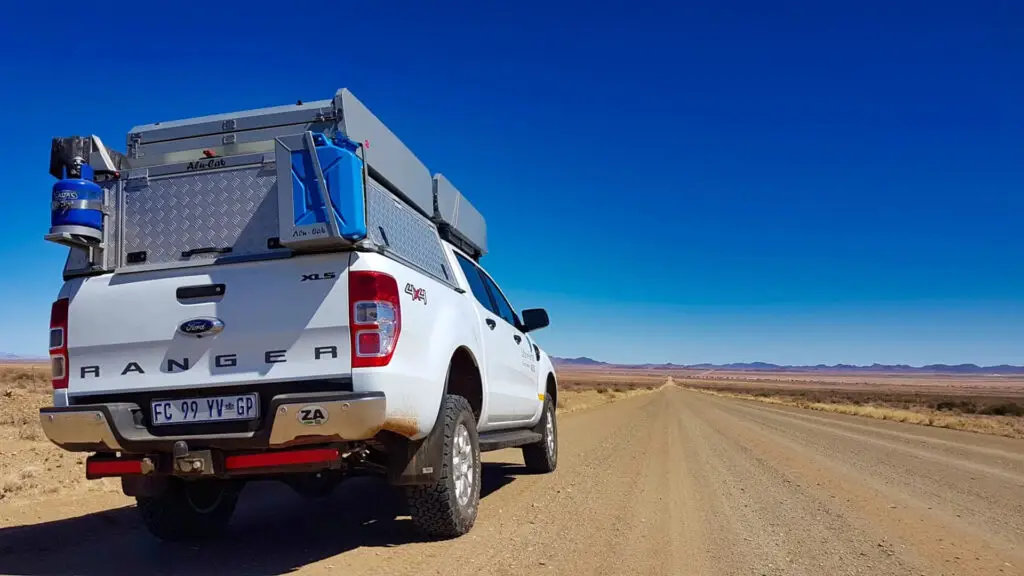
- Many visitors choose vehicles with rooftop tents, space for camping gear, and extra fuel capacity — these features pair naturally with 4×4 rentals for overland trips.
When a 2WD Can Work
- If you plan to stick mostly to tarred highways and well-graded main gravel roads, a 2WD with good ground clearance can cope in dry conditions (e.g., Windhoek to Etosha, or Swakopmund).
- Some travellers on forums report doing main loops with 2WD vehicles, though they note that comfort, tyre health and stability improve with larger vehicles.
- Without a 4×4, access to specific inner tracks or deeper desert drives often means relying on shuttles or skipping certain last-mile sections.
Weather and Seasonal Factors
- During the dry season (roughly May to October), roads including gravel are more stable, and a cautiously driven 2WD can handle many routes.
- In the rainy season (November to April), roads become unpredictable. Flooding, mud and soft sand make the extra traction of 4×4 especially useful.
Safety and Comfort
- A 4×4’s higher clearance helps avoid undercarriage scrapes on rougher gravel or sand.
- Larger tyres on 4×4 vehicles cope better with gravel wear and tear than smaller tyres often found on sedans or compact cars.
- Driving in Namibia is often long distances per day. A 4×4’s cabin and suspension tend to be more comfortable for held-up camping gear and long drives.
Practical Road Tips (for any vehicle)
- Drive slower than posted limits, especially on gravel — typical guideline is 80 km/h there and up to 120 km/h on tar roads.
- Always carry extra water, fuel and tyre repair kit, and know how to use them.
- Watch for wildlife at dawn and dusk; road signs and local experience warn of animal crossings.
What we would suggest
If your dream trip is broad — national parks, dune camps, valleys and wild corners — a 4×4 feels like the right foundation. It doesn’t mean you must use 4WD all the time, but when gravel gets dustier, sand gets softer and tracks get steeper, that extra wheel drive and clearance make the ride less stressful and more smooth.
If you have a smaller budget or just want the main highways (say Windhoek → Etosha → Swakopmund → Sossusvlei entrance), you can manage with a good 2WD in dry months. Many travellers do it. But most safari camping guides and rental agencies recommend a 4×4 because it gives you space, control, and more options to explore beyond the paved strips.
When i first drove here, i was glad i chose a 4×4. It meant i wasn’t constantly checking the dust on tyre walls or worrying about soft sand patches. It meant i could pull up closer to dunes, take detours, and set up camp without hesitating.
Quick Fact Checklist
- Major highways are tarred. Secondary and scenic roads are frequently gravel or sand.
- 4×4 vehicles are recommended for remote areas, sand tracks, and comfort.
- 2WD can work on main routes in dry months, but has limits on sand and softer surfaces.
- Rainy season worsens road conditions on gravel and sand, making 4×4 more useful.
- Higher clearance reduces risk of damage on rough surfaces.
- Good tyres, navigation tools, and extra fuel/water are essential, no matter the vehicle.
Enjoy the freedom to explore Namibia. We provide travellers with a unforgettable self-drive camping safari across Namibia. Our services include trip planning, campsite booking and 24/7 support. We organise fully equipped 4×4 vehicles, rooftop tents, camping equipment, and practical travel support. Our travellers get clear routes, real driving distances, and realistic time planning. No rush. No pressure. Just solid travel planning.
We focus on budget-friendly self-drive camping safaris that still feel safe and well prepared, supporting eco-friendly travel (sustainable self-drive camping safaris). We share real local advice. If a tyre blows or plans change, we’re there to help.
Our team lives and works in Namibia. We know the gravel roads, fuel stops, weather, and wildlife areas. We build routes that make sense and keep the distances realistic. You travel at your own pace, sleep under the stars, and enjoy the freedom.
Let us arrange your camping safari. Join us for an adventure, turning photos into memories.
For a full step-by-step guide, see our complete Namibia Camping Safari Guide