
Summary – When to Visit Sossusvlei
The best time to visit Sossusvlei is usually during Namibia’s dry and cooler months, roughly from April through October. During this period, daytime temperatures are milder and the skies are clear, which makes walking on big dunes easier and your time with sand and desert light more comfortable. Visitors often say the clear morning and evening light in these months makes the dunes look extra dramatic for photography and for that desert feeling you came for.
Within this dry season, May to September usually has the most comfortable weather for exploring without burning heat. The mornings and evenings are crisp; heat builds in the middle of the day but it’s easier to handle than in high summer. Many travellers like going early — sunrise over the dunes is often cited as a highlight of the whole trip.
If you go outside this window — from November through March — you’ll be visiting in Namibia’s hotter months. Heat can soar above 40 °C (104 °F), and that makes climbing dunes and walking long stretches challenging. The rainy season happens then too, but in Sossusvlei it’s rare and short. When it does rain, low areas can fill with water and that gives you rare green contrasts and ephemeral pans, which can be beautiful for photos and wildlife sightings.
So the simple human answer is this: April to October gives you the most pleasant and comfortable weather for exploring dunes and desert landscapes, and is considered the best season for most travellers.
Here’s a clear list of travel facts that explain why this is the case, and how each part of the year can feel on the ground when you’re there.
For a full step-by-step guide, see our complete Namibia Camping Safari Guide
Best Time to Visit Sossusvlei
Dry Season and Weather Comfort
- April to October is widely recommended as the best window to visit. Days are warm, nights are cooler, and the desert feels easier to enjoy on foot.
- May to September often has the most comfortable daytime temperatures (around 20–25 °C) and cool early mornings — good for dune climbs and long walks.
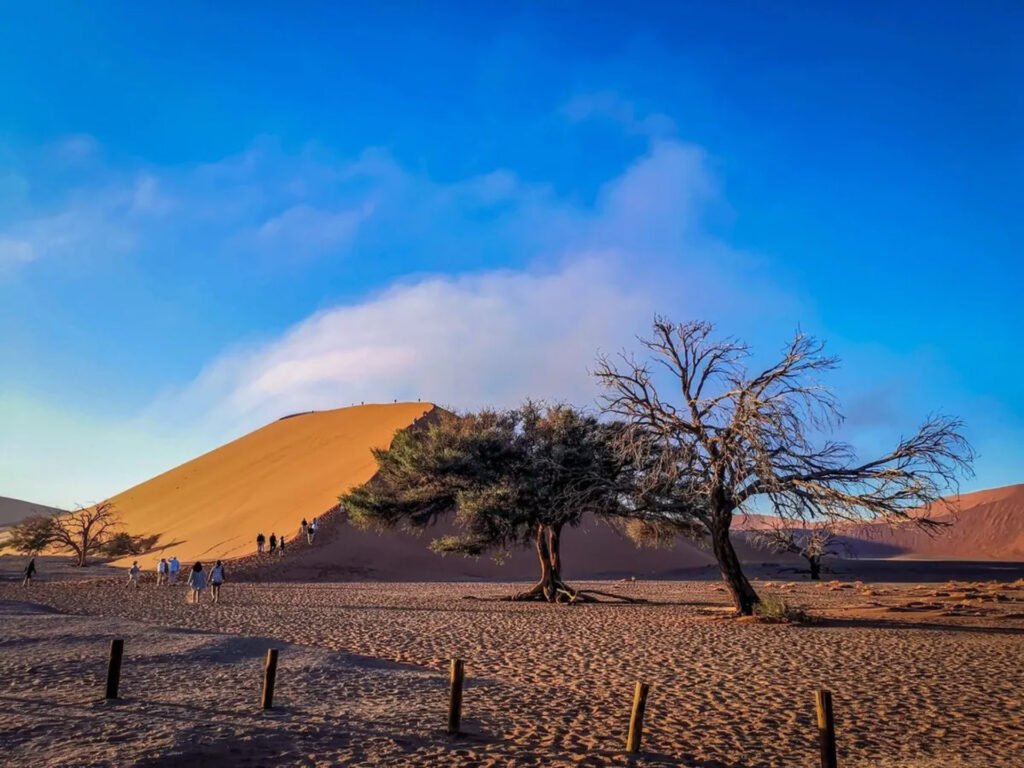
- Clear blue skies are common in these months, which makes photos of dunes and desert shapes more striking. Early light gives contrast and depth to the sand formations.
Heat and Rainy Seasons
- The hot season runs from about November to March or April. Temperatures can climb above 40 °C (104 °F) during midday, which is very hot for walking and hiking.
- Occasional summer rain can create short-lived water pools in the lower parts of the dunes, which can be beautiful and rare — but it doesn’t happen often and usually doesn’t last long.
- Summer storms and sudden puddles can make the last sandy roads a bit trickier for standard cars; some guides suggest a 4×4 in rainy months.
Shoulder and Transition Months
- March and April are sometimes recommended as shoulder months. Temperatures start to cool after summer, and the skies are often clear. These months can combine good weather with fewer crowds at key dune sites.
- Some travel writers suggest autumn (March through May) and spring (August through October) as ideal mixed months with milder daytime heat and gentle nights.
Crowds and Logistics
- The cooler dry months (June–September) are also peak season. These months draw more visitors, so campsites and lodges book up early. Early planning and reservations are wise if you’re traveling then.
- Visiting in the shoulder months can mean quieter trails and fewer people around key dunes like Dune 45 and Deadvlei.
Photography and Light Conditions
- Crisp desert light in the dry months brings out strong shadows and colours on the sand, which most travellers and photographers prefer. (turn0search6)
- Sunrise and sunset are often cooler and clearer, which makes early starts and golden hour photography much more pleasant than midday heat, especially in winter months.
Year-Round Possibility
- Sossusvlei is accessible all year because it doesn’t receive much rain overall. Some travel guides call it a year-round destination due to Namibia’s general lack of rainfall, but conditions vary significantly with temperature and light.
If you want comfort, clear light, and great photos with fewer days lost to heat, planning for April through October works well for most people. If you’re after dramatic storm skies, occasional green desert scenes after rains, or you’re fine with heat and early starts, then the other months can be rewarding in their own way.
Best Time to Sossusvlei
- Cool, dry months April–October give you pleasant temperatures and clear skies.
- May–September often has the most comfortable daytime weather for dune walking and sunrise visits.
- Hot season (November–March) can have temperatures over 40 °C and occasional rain, which makes midday activity hard.
- Shoulder months like March/April and October can give you good weather with fewer crowds.
- All-year access is possible, but timing shapes comfort, light quality, and crowds.
Enjoy the freedom to explore Namibia. We provide travellers with a unforgettable self-drive camping safari across Namibia. Our services include trip planning, campsite booking and 24/7 support. We organise fully equipped 4×4 vehicles, rooftop tents, camping equipment, and practical travel support. Our travellers get clear routes, real driving distances, and realistic time planning. No rush. No pressure. Just solid travel planning.
We focus on budget-friendly self-drive camping safaris that still feel safe and well prepared, supporting eco-friendly travel (sustainable self-drive camping safaris). We share real local advice. If a tyre blows or plans change, we’re there to help.
Our team lives and works in Namibia. We know the gravel roads, fuel stops, weather, and wildlife areas. We build routes that make sense and keep the distances realistic. You travel at your own pace, sleep under the stars, and enjoy the freedom.
Let us arrange your camping safari. Join us for an adventure, turning photos into memories.
For a full step-by-step guide, see our complete Namibia Camping Safari Guide