Summary – What Makes a Namibia Eco‑friendly Self‑drive Camping Safaris
If you care about travelling in a way that respects nature, supports local people, and helps conservation — Namibia is one of the places in Africa where tourism can do that. The country has a strong framework for sustainable tourism that includes community conservancies and awards for eco‑friendly operations. Namibia was one of the first countries whose constitution protects habitat and natural resources, and community‑based conservation tourism is a major part of how the industry works with rural areas. We support Namibia eco‑friendly self‑drive camping safaris, campsites and tented camps.
For Namibia eco‑friendly self‑drive camping safaris, the idea is simple: you choose designated campsites and reputable providers, you reduce waste and water use, you respect wildlife and local culture, and you contribute to conservation fees and community benefits through park levies, local guides, and purchases.
Many lodges and camps actively work to power their facilities with solar energy, recycle waste, source food locally, and support local gardens that supply fresh produce. Some conservancies and camps generate income that goes back to local people, which strengthens wildlife protection and rural livelihoods.
A self‑drive safari that follows these principles can help you feel good about the trip you’re making — not just enjoy the landscapes and animals, but also leave positive footprints as you travel.
For a full step-by-step guide, see our complete Namibia Camping Safari Guide
What You Need to Know
Namibia’s Commitment to Sustainable Tourism
- Namibia’s tourism mission includes sustainable tourism and conservation of natural resources, guided by industry standards like the Eco Awards Namibia, which recognize responsible tourism businesses.
- The Tour and Safari Association of Namibia works with private sector, NGOs, and government to promote practices that protect ecosystems and support communities.
Community Conservancies and Tourism Benefits
- Joint efforts between conservancies and tourism operators give communities ownership and income from tourism, which supports wildlife protection and local economies. Programs like the one in Damaraland show how revenue from tourism helps villages and wildlife alike.
- Tourism income often pays conservation levies, salaries for local workers, and development projects, which increases wildlife numbers where community conservancies operate.
Eco‑Friendly Accommodation and Practices
- Many camps and lodges encourage minimizing water consumption, recycling waste, and supporting local produce to reduce their environmental impact.
- Some properties use solar energy, water recycling, and environmentally friendly building methods to lower their footprint.
- In communal areas, eco‑camps often support local gardens and local food sourcing, which reduces waste and boosts rural livelihoods.
Responsible Self‑Drive Camping Norms
- Self‑drive travellers are advised to use designated camp sites and avoid wild camping, which protects wildlife habitats and reduces disturbance.
- When camping, it’s best to take all rubbish with you and use biodegradable products whenever possible, which helps keep the desert clean and safe for wildlife.
- Respect wildlife by keeping distance, not feeding animals, and following park rules — this protects both you and the animals and helps maintain natural behaviour.
Travel Impact and How You Can Help
- Every park entrance fee and conservation levy is often reinvested into habitat protection and infrastructure for wildlife areas in Namibia’s parks, strengthening the whole tourism system.
- Supporting locally owned businesses and community conservancies means your travel dollars benefit rural families directly — through employment, craft sales, and services.
- Simple actions like using refillable water bottles and biodegradable soaps reduces plastic use and protects soils — especially important where water is scarce.
Why This Matters for Campers and Safari Fans
- Namibia’s self‑drive camping model gives you freedom on the road while still offering ways to travel with care for the environment and people. Sustainable tourism isn’t just a buzzword here — it’s part of how tourism is run.
- Even when you’re driving through remote landscapes, engaging with conservancy initiatives, respectful wildlife viewing, and eco‑aware campsites makes your trip part of a positive tourism footprint.
- The tourism industry encourages travellers to see wildlife safely from their vehicles, follow park rules, and make choices that support conservation and local communities throughout their safari.
Namibia’s wide horizons and wildlife moments are unforgettable. But i think what makes a trip meaningful is coming home feeling like you gave back, even a little, not just took memories from the road. And that’s the heart of an eco‑friendly self‑drive camping safari here.
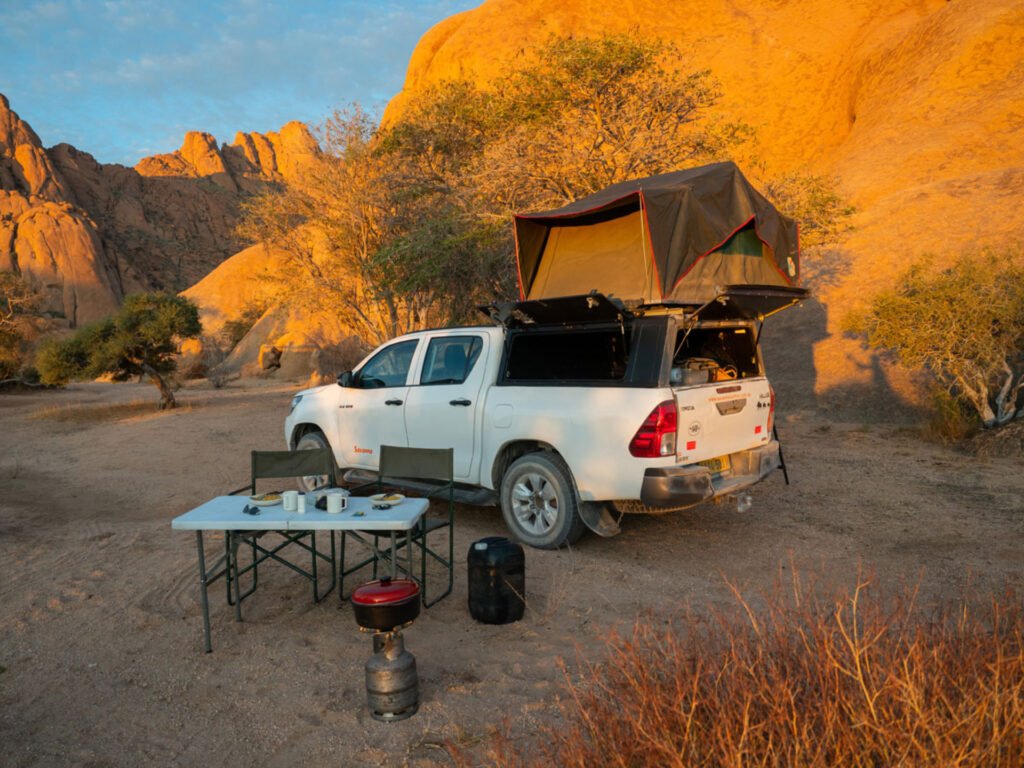
Enjoy the freedom to explore Namibia. We provide travellers with a unforgettable self-drive camping safari across Namibia. Our services include trip planning, campsite booking and 24/7 support. We organise fully equipped 4×4 vehicles, rooftop tents, camping equipment, and practical travel support. Our travellers get clear routes, real driving distances, and realistic time planning. No rush. No pressure. Just solid travel planning.
We focus on budget-friendly self-drive camping safaris that still feel safe and well prepared, supporting eco-friendly travel (sustainable self-drive camping safaris). We share real local advice. If a tyre blows or plans change, we’re there to help.
Our team lives and works in Namibia. We know the gravel roads, fuel stops, weather, and wildlife areas. We build routes that make sense and keep the distances realistic. You travel at your own pace, sleep under the stars, and enjoy the freedom.
Let us arrange your camping safari. Join us for an adventure, turning photos into memories.
For a full step-by-step guide, see our complete Namibia Camping Safari Guide