Summary – When to Visit Etosha National Park
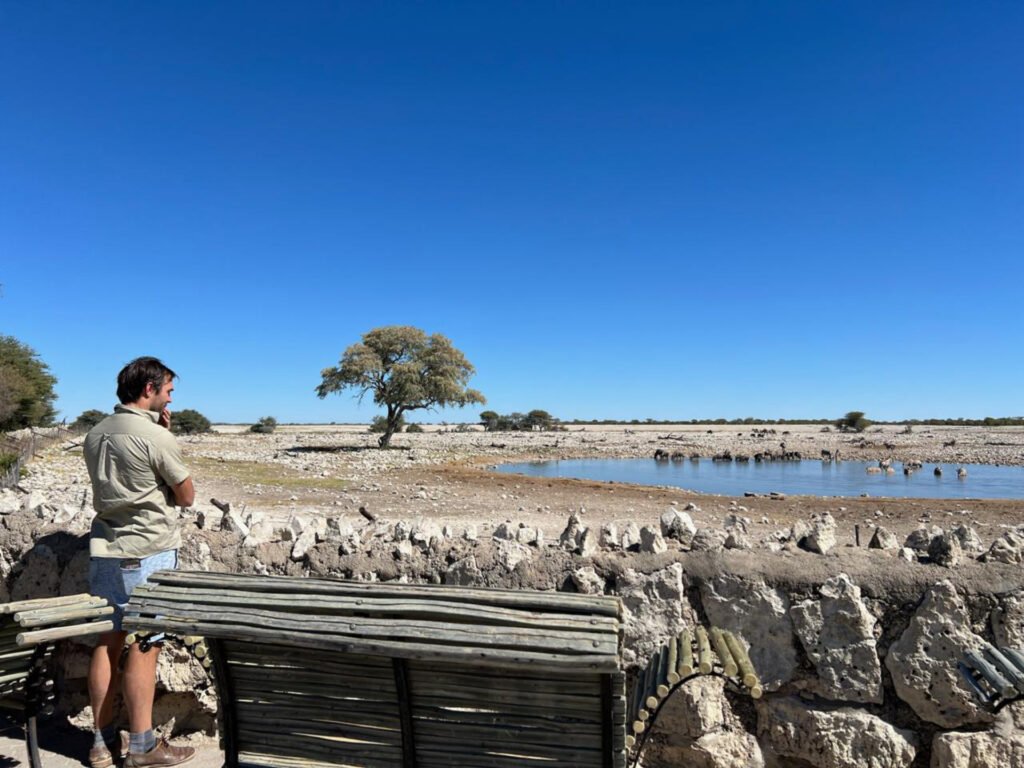
The following will explain the best time to visit Etosha National Park which has two main seasons that matter to travellers: the dry season and the wet season. Most wildlife guides and safari articles agree that the best time for general wildlife viewing is during the dry season, roughly from May (or June) through October. During these months animals gather around the few remaining waterholes, and the grasses are short so it’s easier to spot them. Many safari travellers say June through September gives you the most consistent sightings of elephants, lions, giraffes, zebra and other animals because they concentrate where water is available.
This period is also when Etosha gets cooler nights and clear skies, which many travellers prefer over hotter months. It’s also the time when visitor numbers are highest, because safari guides and wildlife writers often recommend these months first for animal sightings.
On the other hand, the wet season (roughly November–April) brings rain, greener landscapes, and excellent birdwatching with migratory species arriving in large numbers. Animals spread out since water is everywhere, so you can still see wildlife, but game viewing is generally more dispersed and can be harder than in the dry months.
Some travellers actually like the wet months for the lush scenery, fewer visitors, and lower rates at camps. But if your priority is seeing the big mammals gathering at waterholes, the dry months are where most safari experts and locals direct you.
For a full step-by-step guide, see our complete Namibia Camping Safari Guide
When to Visit Etosha
Dry Season: Best for Classic Wildlife Viewing
- The dry season in Etosha runs roughly May or June through October. Wildlife congregates at permanent waterholes, making sightings easier for self-drive or guided game drives.
- June–September are often cited by safari guides as particularly good months for game viewing. Animals like elephants, zebra, giraffe, and predators like lions are often seen at the few remaining water sources.
- During the dry season, grass is short and visibility is better for spotting animals across open plains. This makes photos and sightings clearer on game roads.
- Temperatures are warm during the day and cool at night in winter months (May–August), so packing a warm layer for early mornings and evenings helps.
- This dry winter period is peak safari season, so lodges and camps inside and around Etosha can fill up quickly — especially July and August. Early booking is wise.
Wet Season: Green Scenery and Birdlife
- The wet season runs roughly November to April. Rain refreshes the pans and grasslands, making the park lush and green. Wildlife is still present, but many animals don’t need to gather at waterholes since water is spread across the landscape. That can mean animals are less easy to spot.
- Migratory birds arrive in large numbers during the wet season — great for birdwatchers. The Etosha Pan may fill with water and attract flamingos and water birds, a dramatic seasonal highlight.
- Weather in wet months can bring thunderstorms and afternoon showers, which create dramatic skies and lush scenes but may make some gravel roads slower or muddier after heavy rain.
Transition Months and Visitor Tips
- April and early May can be good transition months where wildlife starts to concentrate as water begins to dry up but before the peak crowds arrive. Many travellers find this time comfortable for game viewing and weather.
- October is usually still in the dry season and warm, but sights can start to spread as water sources dwindle more rapidly. Good for photography at waterholes as animals make longer visits.
- Booking in the peak months means arranging campsites and guesthouses well ahead, as locals and travel guides consistently warn that Etosha fills up in winter.
Wildlife Sightings vs Weather
- Wildlife viewing is most predictable in the dry season because water is scarce and animals cluster at waterholes. That’s the period most safari operators highlight for game drives and sightings.
- In the wet months, baby animals, lush vegetation, and birdlife flourish. Many travellers value this because the park feels alive with motion and colour, even if big game is more spread out.
If your goal is consistent wildlife viewing with minimal vegetation blocking your view, you’ll find the dry months from May through October give you the best chance. If you love birds, wildlife in a different mood, and lush landscapes, then November through April offers a quieter and green season with its own rewards.
Best Time to Visit Etosha
- Dry season (May/June–October): best for wildlife viewing — animals gather at waterholes and the vegetation is low.
- June–September are often highlighted as peak viewing months with cool mornings and frequent sightings.
- Wet season (November–April) brings lush scenery, baby animals, and excellent birdwatching, but wildlife disperses more widely.
- April and early May can be good transition months with decent visibility and fewer crowds.
- Booking early for peak months is advised as accommodation fills quickly.
Enjoy the freedom to explore Namibia. We provide travellers with a unforgettable self-drive camping safari across Namibia. Our services include trip planning, campsite booking and 24/7 support. We organise fully equipped 4×4 vehicles, rooftop tents, camping equipment, and practical travel support. Our travellers get clear routes, real driving distances, and realistic time planning. No rush. No pressure. Just solid travel planning.
We focus on budget-friendly self-drive camping safaris that still feel safe and well prepared, supporting eco-friendly travel (sustainable self-drive camping safaris). We share real local advice. If a tyre blows or plans change, we’re there to help.
Our team lives and works in Namibia. We know the gravel roads, fuel stops, weather, and wildlife areas. We build routes that make sense and keep the distances realistic. You travel at your own pace, sleep under the stars, and enjoy the freedom.
Let us arrange your camping safari. Join us for an adventure, turning photos into memories.
For a full step-by-step guide, see our complete Namibia Camping Safari Guide