Summary – What Every First-Time Self-Drive Camper Should Know
If you plan to drive yourself and camp around Namibia, know this right away: you must prepare for distance and for yourself. Follow our Namibia self-drive camping tips for first-time visitors, and enjoy your self-drive camping safari. The country is beautiful, but it’s big and empty in places. Some roads are tarred, but many are gravel or even soft sand tracks. You want the right vehicle and the right gear so you don’t regret it later. And simple things like fuel, water, food, and knowing where you’re sleeping matter more here than in most places you might have travelled before.
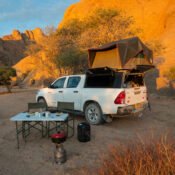
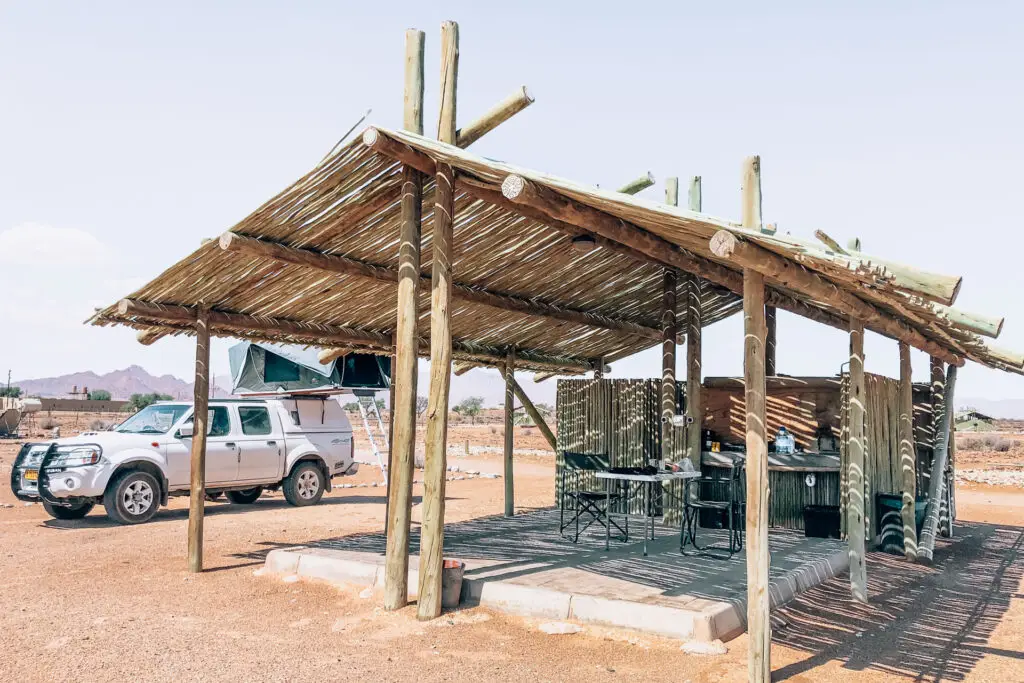
Most self-drive trips here are done in a 4×4 with camping gear — either a rooftop tent or a ground tent you bring yourself. You’ll see big dunes, wildlife, desert plains, and sunsets that pull you out of the everyday. But these routes take time, and they take planning.
You should always plan your itinerary, check fuel stations, and book your campsites in advance — especially in the dry months (June–October) when places fill fast.
Wild camping outside designated spots is usually not allowed, and it can be unsafe. Stick to official campsites which offer space, ablutions, security, and rules that keep you and the wildlife safe.
Prepare for sun, dust, cold nights, sparse mobile signals, and long distances. Bring offline maps, extra water, spare fuel and tyres, first-aid items, and patience. After a couple of days on the road, you’ll start to feel the rhythm of Namibia. It’s slow. And that’s part of why people love it.
Below you’ll find the key tips that matter — practical, fact-based, and grounded in what travellers really experience here.
For a full step-by-step guide, see our complete Namibia Camping Safari Guide
Practical Tips
1. Choose the right vehicle
- Most self-drive visitors rent a 4×4 vehicle. Gravel and sand roads are common, and a 4×4 gives better clearance and grip.
- Rooftop tents or built-in camping gear with the vehicle makes setup easier and keeps you mobile.
- Many rental companies offer emergency kits, two spare tyres, and satellite phones.
2. Know the road conditions
- Major highways are usually tarred. Secondary roads are often gravel and can be loose or corrugated.
- After rain, gravel can become slick or slippery. Drive slower.
- Avoid driving at night, especially outside towns — there are no lights, and wildlife or cattle can appear.
3. Plan your route and fuel stops
- Distances are large. Google Maps can underestimate travel times on gravel roads. Plan extra drive time.
- Petrol stations may be sparse in remote stretches. Fill up when you can.
- Decide where you’ll sleep ahead of time — campsites often fill up in high season (June to October).
4. Camping essentials
- Bring plenty of drinking water — at least 3–5 L per person per day.
- Pack non-perishable food and enough for remote days.
- Sunscreen, hats, warm layers for nights, and insect repellent.
- First-aid kits, tools, a jack, and tyre repair kit.
5. Navigation and communication
- Download offline maps (Tracks4Africa or Maps.me) because cell signal often disappears.
- Know your route before you leave. Tell someone at home your plan and expected return times.
- In very remote areas consider a satellite phone or GPS emergency beacon.
6. Safety first
- Namibia is generally safe, but remote roads require you to be self-sufficient.
- Lock your vehicle when not in use, and keep valuables out of sight.
- In parks like Etosha, follow rules: stay in your vehicle near animals and keep a respectful distance.
7. Campsite etiquette
- Stick to designated campsites — wild camping is discouraged or prohibited in many areas.
- Clean up after yourself; pack trash out with you.
- Follow camping site rules about fires, food storage, and quiet hours.
8. What you’ll learn once you’re on the road
- Gravel roads and slow driving mean your pace is relaxed. Let the day guide you, not your watch.
- Expect dust everywhere — it gets in gear, cameras, and snacks. Protect items accordingly.
- Rest stops matter — find shade, cool off, eat food, and refill water.
Here’s what i learned: planning changes those fears into confidence. When i had water, food, offline maps, a good tyre, and a plan for stopovers — i felt calm. I saw wildlife at waterholes. I watched dunes at sunrise with a cup of coffee. I shared a fire with other campers at night.
The benefit of Namibia self-drive camping tips for first-time visitors is not just where you go, but how you travel. You’re in charge. You stop when you want. You watch light change over the desert plain. You answer only to your own rhythm. You can use these tips to stay safe and enjoy your adventure.
But that freedom comes with responsibility — to respect wildlife, road rules, weather, and your own limits. And when you honour that, the land gives something back.
Quick Reminders
- Fill up fuel early.
- Camp only at designated campsites.
- Pack water, food, tools, and offline maps.
- Drive slow on gravel.
- Tell someone your plan before you leave.
Emergency Authorities and Assistance Organisasions
Emergency Numbers in Namibia:
- General Emergency Line/Police: 10111
- Fire Department: +264 61 2032270
- Accident Rescue Services: +264 61 2032276
- Tourist Police (Windhoek): +264 61 2902239 / +264 81 2846562
- SOS International Emergency (24h): +264 61 230505 or +264 61 249777
- German Embassy in Windhoek: +264 61 273100
Medical Emergency Facilities:
- Medi Clinic Windhoek: +264 61 222687
- Catholic Mission Hospital Windhoek: +264 61 2702911
- Rhino Park Private Hospital Windhoek: +264 61 375000
Enjoy the freedom to explore Namibia. We provide travellers with a unforgettable self-drive camping safari across Namibia. Our services include trip planning, campsite booking and 24/7 support. We organise fully equipped 4×4 vehicles, rooftop tents, camping equipment, and practical travel support. Our travellers get clear routes, real driving distances, and realistic time planning. No rush. No pressure. Just solid travel planning.
We focus on budget-friendly self-drive camping safaris that still feel safe and well prepared, supporting eco-friendly travel (sustainable self-drive camping safaris). We share real local advice. If a tyre blows or plans change, we’re there to help.
Our team lives and works in Namibia. We know the gravel roads, fuel stops, weather, and wildlife areas. We build routes that make sense and keep the distances realistic. You travel at your own pace, sleep under the stars, and enjoy the freedom.
Let us arrange your camping safari. Join us for an adventure, turning photos into memories.
For a full step-by-step guide, see our complete Namibia Camping Safari Guide