Summary – What to See and Why
Namibia is not one place. It’s many places. Each one shows you a different side of the country. Some are about wildlife and conservation. Others are about desert landscapes, big skies, and silence you don’t find anywhere else. Some towns are about history and culture. And a few spots mix nature with activities that leave you both tired and happy by sunset. Find the best places to visit in Namibia.
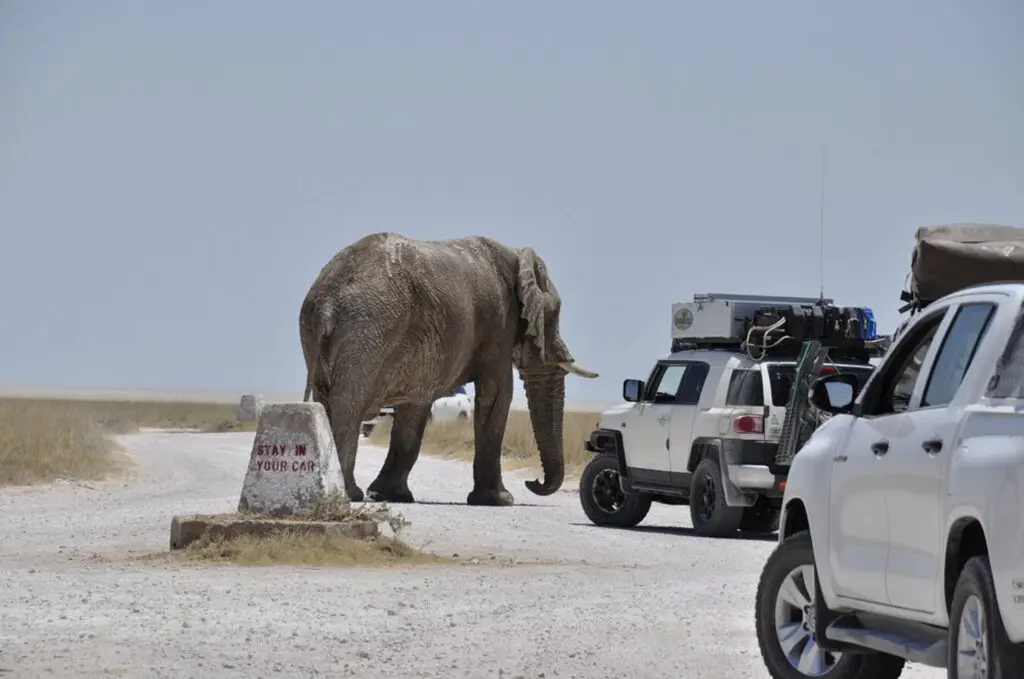
Most travellers go to Etosha National Park for wildlife. It’s widely seen as one of Africa’s top safari destinations. You can drive yourself through the park, see wildlife at waterholes, and spend nights at bush camps.
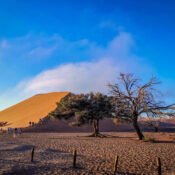
Then there’s Sossusvlei in the Namib Desert. The red dunes — some of the tallest in the world — are like giant sculptures shaped by wind and sun. Sunrise or sunset makes them glow. People climb dunes like Dune 45 or visit Deadvlei, a white clay pan with old trees standing like memories frozen in time.
If you travel south, you’ll see Fish River Canyon — one of the biggest canyons on Earth. The scale makes your shoes look small. You can sit on a lookout and feel quiet, or hike if you’re up for a longer trek.
Along the Skeleton Coast, the wind and sea meet in spectacular ways. There’s sand and shipwrecks, seals along the shore, and a sense of space that’s hard to describe.
The coastal towns like Swakopmund and Walvis Bay mix ocean breezes with adventure activities and cultural history. You’ll find German-era buildings, seafood, dunes nearby, and water birdlife at the lagoon.
Winding through the west and north, places like Damaraland, Twyfelfontein, the Quiver Tree Forest, or the Caprivi/Zambezi Region add desert wildlife, ancient rock art, and river country that’s greener and wetter than most of Namibia. These places reward patience and slow travel.
And Windhoek, the capital, has museums and parks where you can catch a breather and learn about history, culture, and how Namibia became what it is today.
Where you start and how many of these you visit depends on your time, your interests, and how you like to travel — quick stops or slow journeys. Let’s break it down into fact points you can use.
For a full step-by-step guide, see our complete Namibia Camping Safari Guide
Fact Points – Places to Visit in Namibia
Etosha National Park
- Etosha is one of Namibia’s most renowned safari destinations with abundant wildlife. Waterholes are central spots for animal sightings.
- You can do self-drive safaris or guided game drives. Many camps offer viewing decks over waterholes at night.
Sossusvlei and Namib Desert
- Sossusvlei’s red dunes are among the highest sand formations globally. Visiting at sunrise or sunset gives dramatic light and shadows over the dunes.
- Deadvlei, with its dry clay pan and ancient dead trees, is one of the most photographed spots in the desert.
Fish River Canyon
- Fish River Canyon is up to 160 km long and around 550 m deep in places, making it one of the largest canyons on Earth.
- There are lookout points and multi-day hikes for stronger travellers wanting a challenge.
Skeleton Coast National Park
- Stretching along the Atlantic, the Skeleton Coast offers stark beach scenery, sand blown inland, and a quiet that feels elemental. Visitors sometimes see whale bones, shipwrecks, seals and birds.
Swakopmund and Walvis Bay
- Swakopmund is a coastal town with German colonial heritage, seaside walks, restaurants, and outdoor activities like sand boarding or quad biking.
- Walvis Bay’s lagoon attracts flamingos, pelicans, and other birdlife, and offers kayaking or boat tours to see seals and water birds.
Damaraland and Twyfelfontein
- Damaraland’s landscape is rugged and scenic. It’s home to desert-adapted elephants, rhinos, and rock art sites.
- Twyfelfontein has ancient rock engravings — over 2,000 petroglyphs that show animal figures and hunting scenes carved by early hunter–gatherers.
Quiver Tree Forest
- Near Keetmanshoop, this forest of quiver trees is unusual and photogenic, especially when yellow flowers bloom and wildlife moves through the area.
Caprivi Strip / Zambezi Region
- This northern region is greener and wetter than the rest of Namibia, with rivers, wetlands, hippos, elephants, and over 450 bird species. A boat ride on the river adds a different pace to your trip.
Windhoek City Highlights
- Windhoek’s museums like the Independence Memorial Museum and the National Museum tell parts of Namibia’s history and heritage that help you understand the country’s identity before you hit the roads.
Other Natural Spots and Experiences
- Spitzkoppe is famous for granite peaks, stargazing, and rock formations that many travellers find unforgettable.
- Sandwich Harbour where desert meets ocean creates a landscape that’s different from dunes inland, with flamingos and shore birds on the edge of sand and sea.
How these Spots Fit Together
If you have a week or so, you might:
- Start in Windhoek to reset after your flight and see a bit of city life.
- Head south to Sossusvlei and the dunes.
- Go west to Swakopmund and Walvis Bay for sea air and coastal birds.
- Travel north to Damaraland for culture and ancient art.
- End up in Etosha for wildlife — even watch elephants walk past a waterhole as the sun sets.
If you have more time, the Caprivi/Zambezi region adds rivers and birds to your desert travels. Fish River Canyon rewards slow travellers who like big views and hiking.
Namibia is about choice and pacing. Some people come for the wildlife, others for photos of dunes, others for quiet landscapes and culture. All these places have meaning — to someone, somewhere, on their first trip.
Quick Reference
- Etosha National Park — premier safari park with easy game viewing around waterholes.
- Sossusvlei & Deadvlei — red dunes and dramatic desert landscape.
- Fish River Canyon — one of the world’s largest canyons with lookouts and trails.
- Skeleton Coast National Park — wild Atlantic coast with sand, seals, and shipwrecks.
- Swakopmund & Walvis Bay — coastal towns with seaside activities, colonial architecture, and bird life.
- Damaraland & Twyfelfontein — desert wildlife and ancient rock art.
- Quiver Tree Forest — unique botanical attraction near Keetmanshoop.
- Caprivi/Zambezi Region — rivers, wetlands, birds, and boat experiences. (turn0search11)
- Windhoek city attractions — museums and culture before you hit the road.
- Spitzkoppe — granite peaks and stargazing.
- Sandwich Harbour — where dunes meet the Atlantic, with possible flamingos and sea birds.
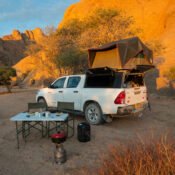
Enjoy the freedom to explore Namibia. We provide travellers with a unforgettable self-drive camping safari across Namibia. Our services include trip planning, campsite booking and 24/7 support. We organise fully equipped 4×4 vehicles, rooftop tents, camping equipment, and practical travel support. Our travellers get clear routes, real driving distances, and realistic time planning. No rush. No pressure. Just solid travel planning.
We focus on budget-friendly self-drive camping safaris that still feel safe and well prepared, supporting eco-friendly travel (sustainable self-drive camping safaris). We share real local advice. If a tyre blows or plans change, we’re there to help.
Our team lives and works in Namibia. We know the gravel roads, fuel stops, weather, and wildlife areas. We build routes that make sense and keep the distances realistic. You travel at your own pace, sleep under the stars, and enjoy the freedom.
Let us arrange your camping safari. Join us for an adventure, turning photos into memories.
For a full step-by-step guide, see our complete Namibia Camping Safari Guide